
ınstallatıon: connectıon & construction
-
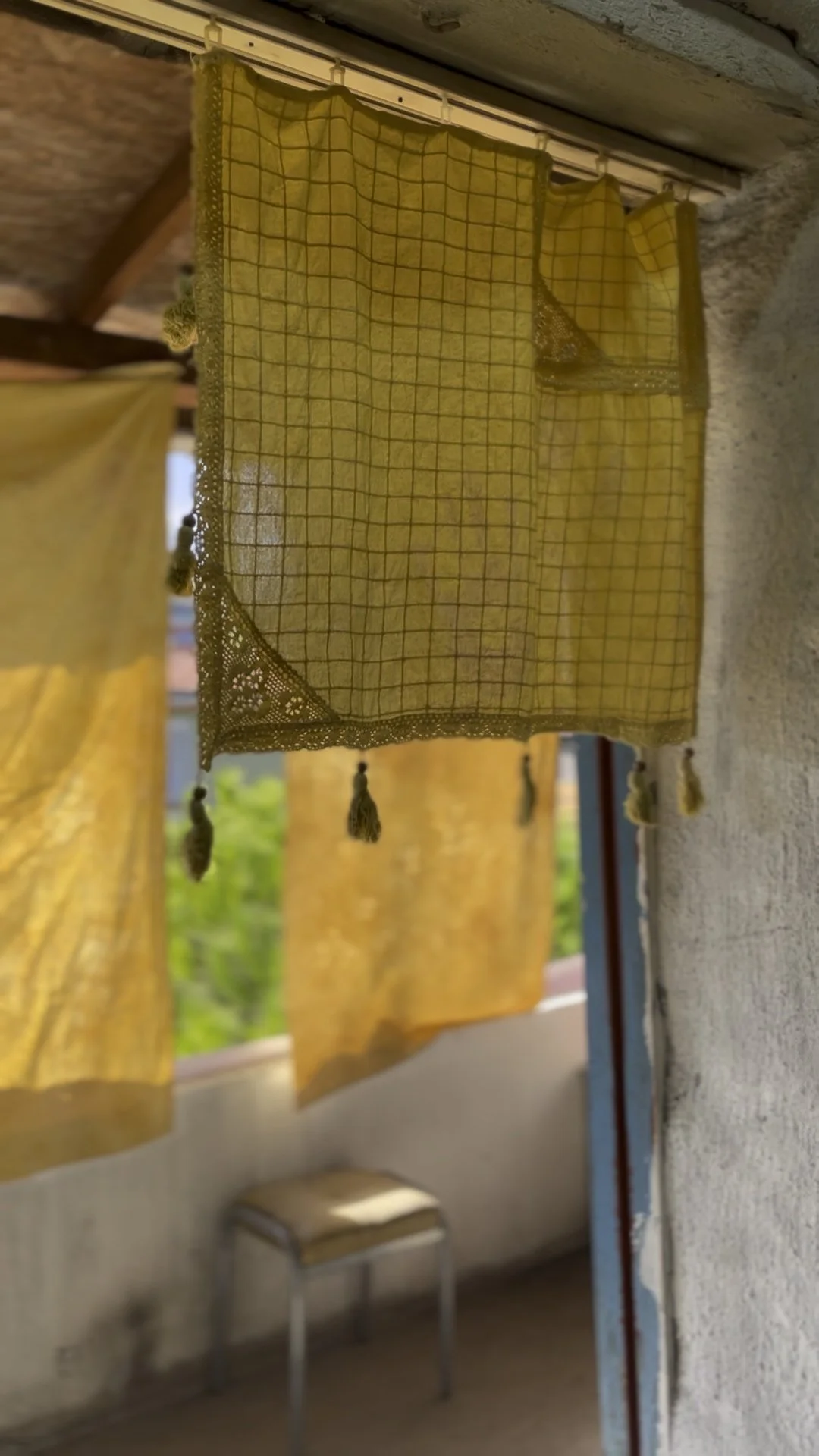
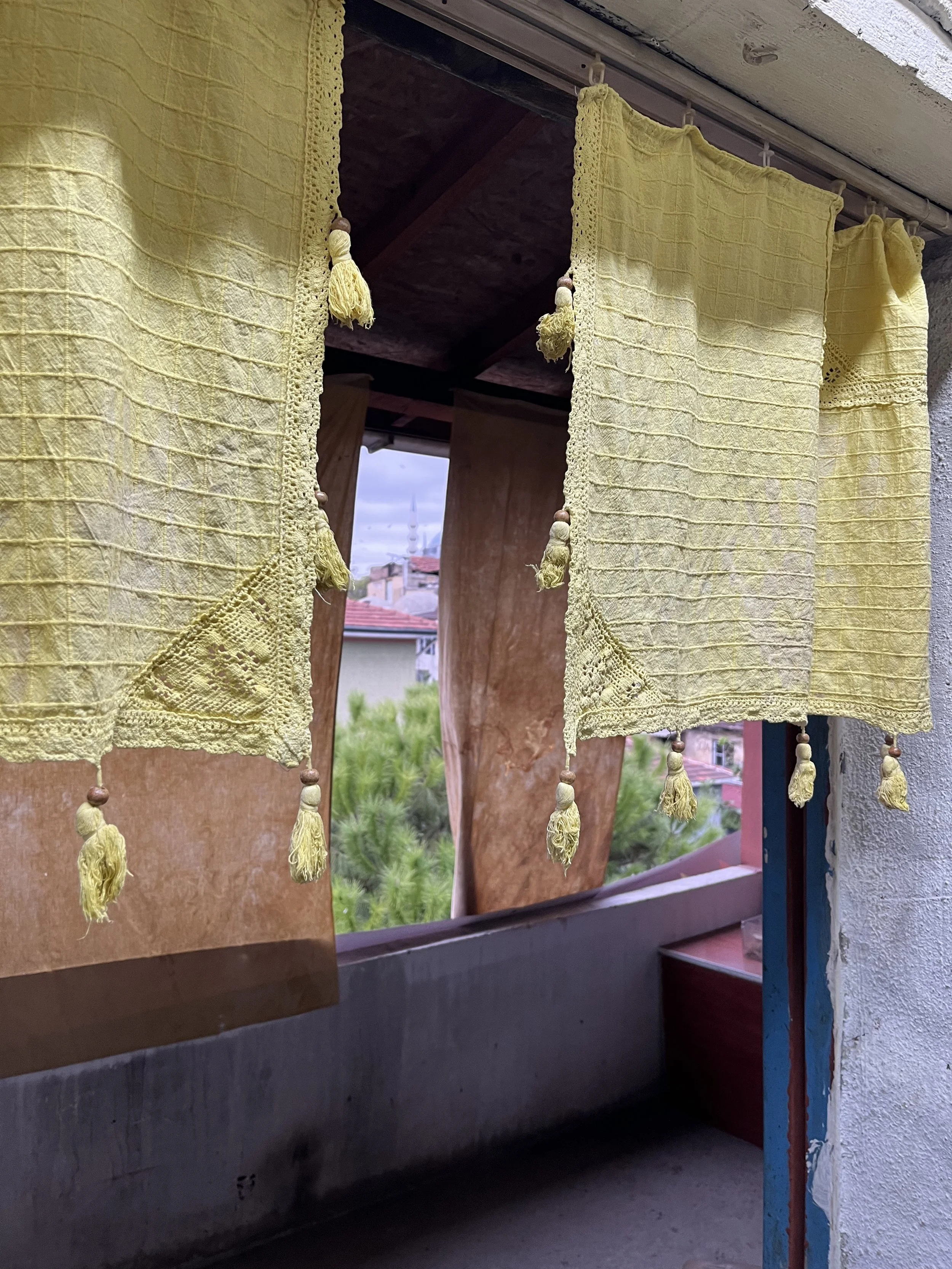
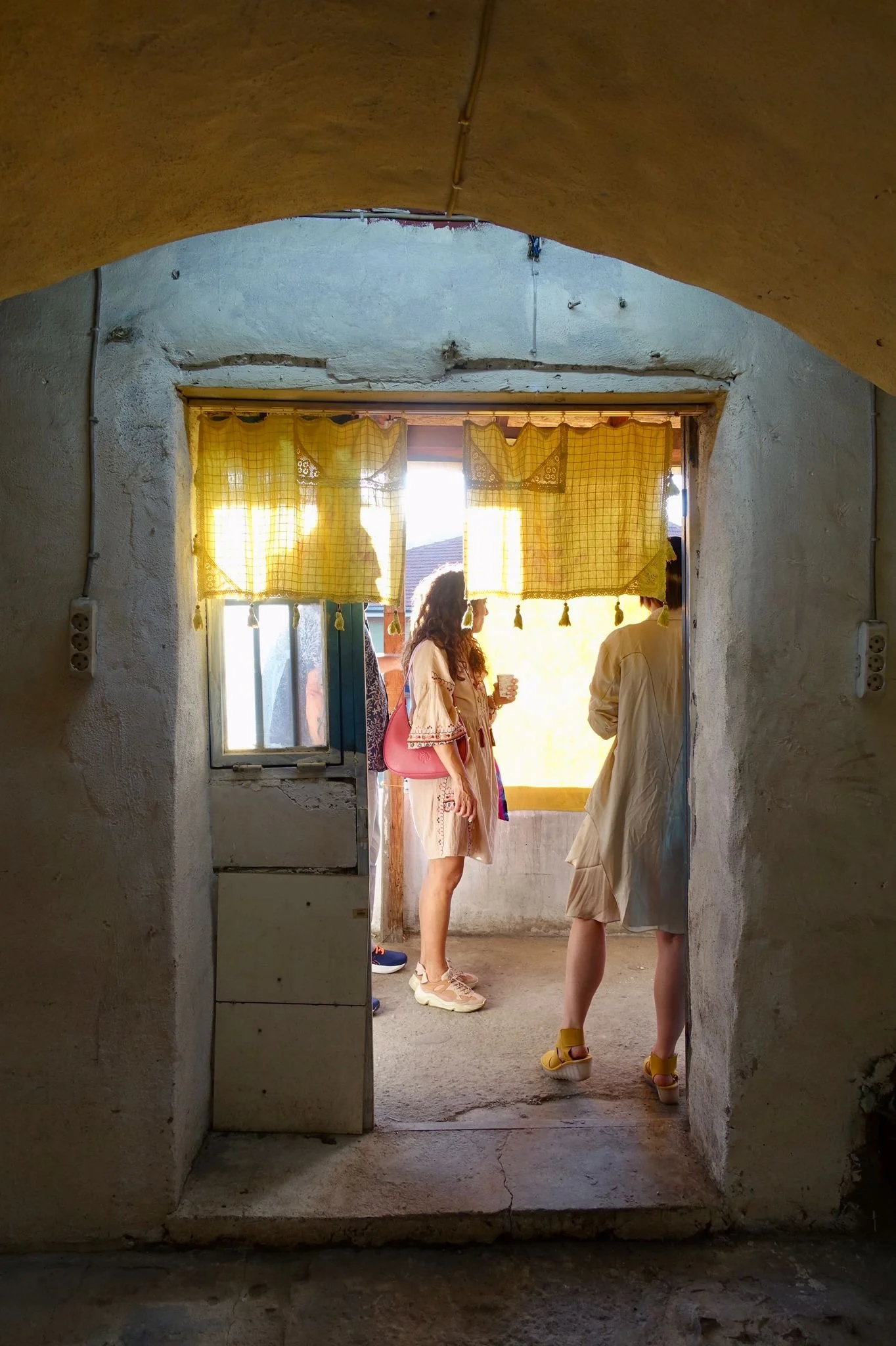
The project İzi | Trace reflects on expectations of perfection and immediacy in textile production, a cultural ideal that often obscures the human element of contemporary production lines.
Taking inspiration from the festival’s location in Buyuk Valide Han in Istanbul, İzi | Trace honors the tradition of handmade craft and slow creation.
It comprises a series of textile works that document human touch on fabric through natural dye processes.
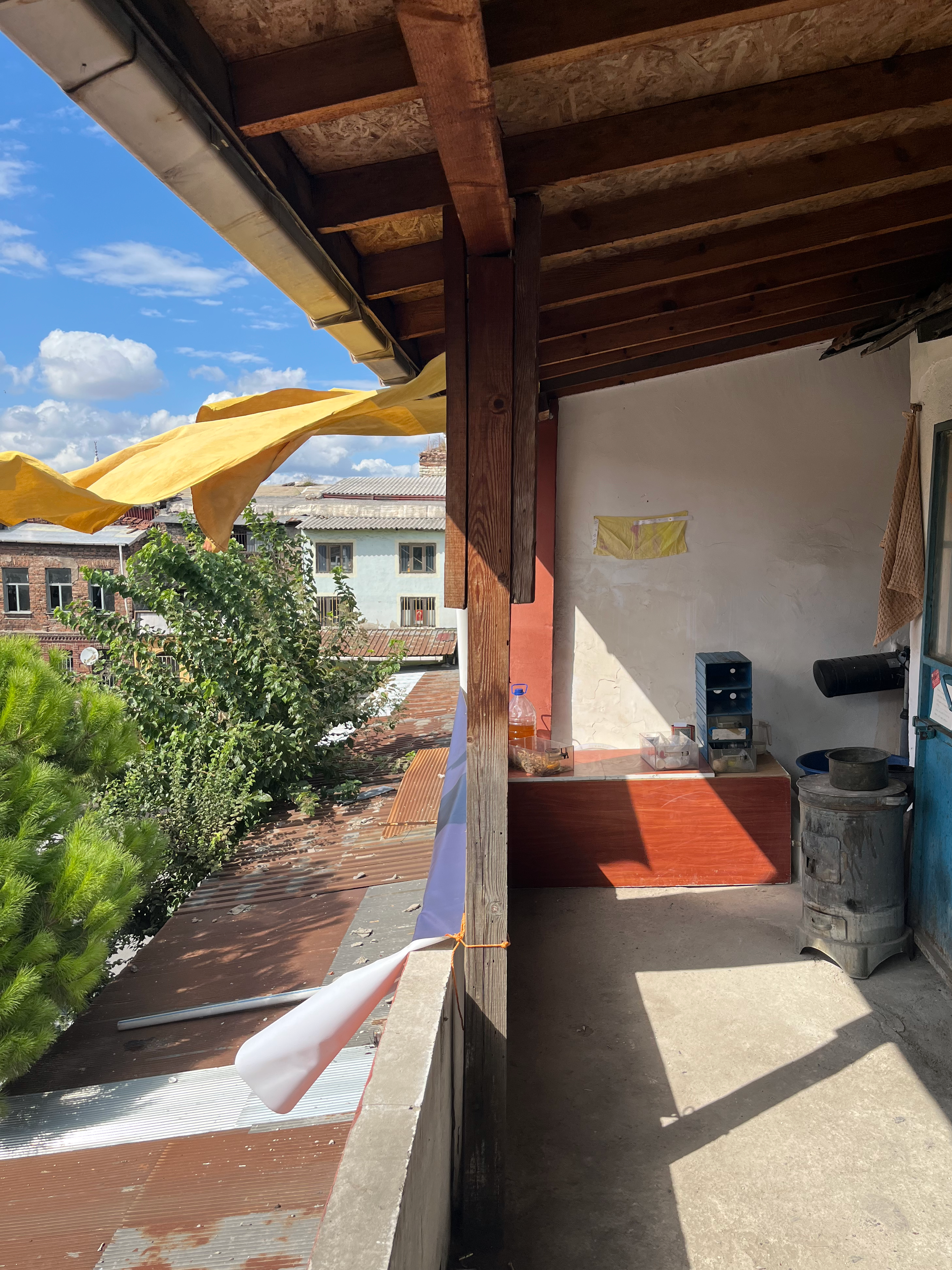
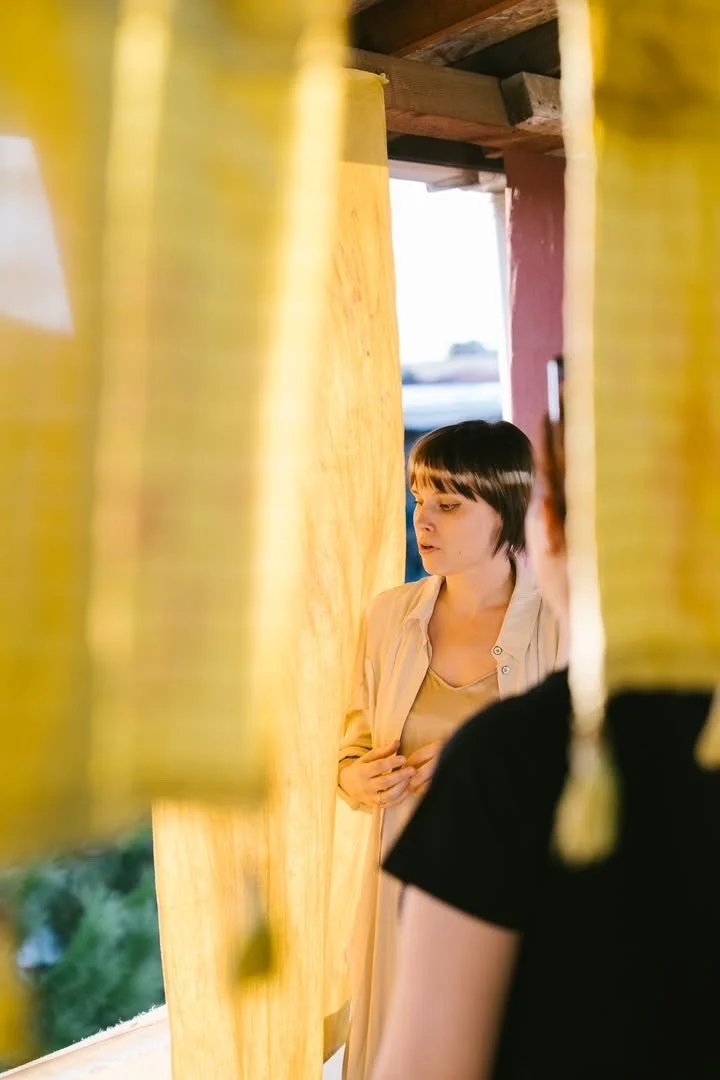
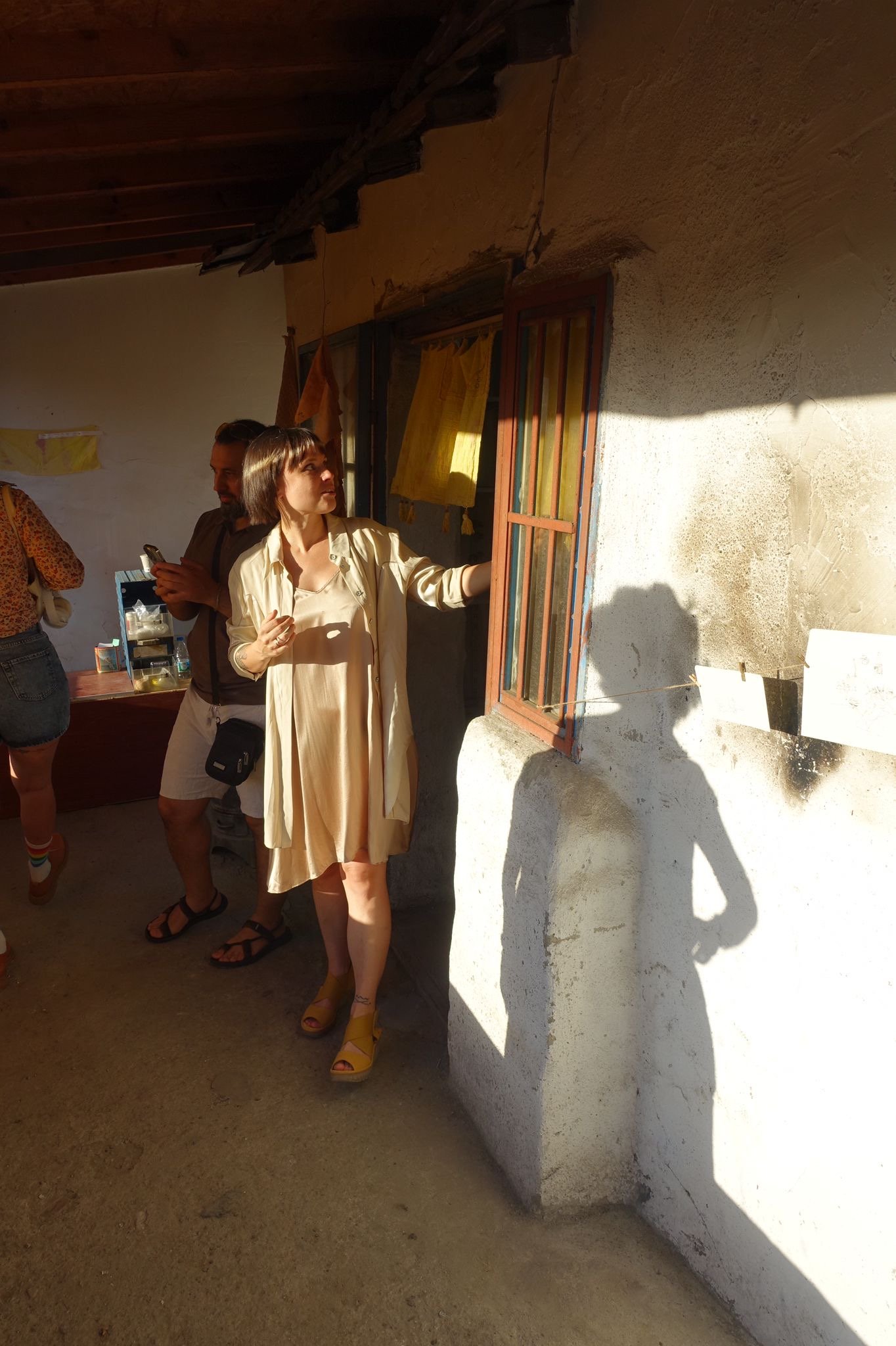
Golden curtains dyed with turmeric were installed on the balcony of one of the Han’s atölyes for the duration of 2025’s Mahalla Festival titled Midas Touch.
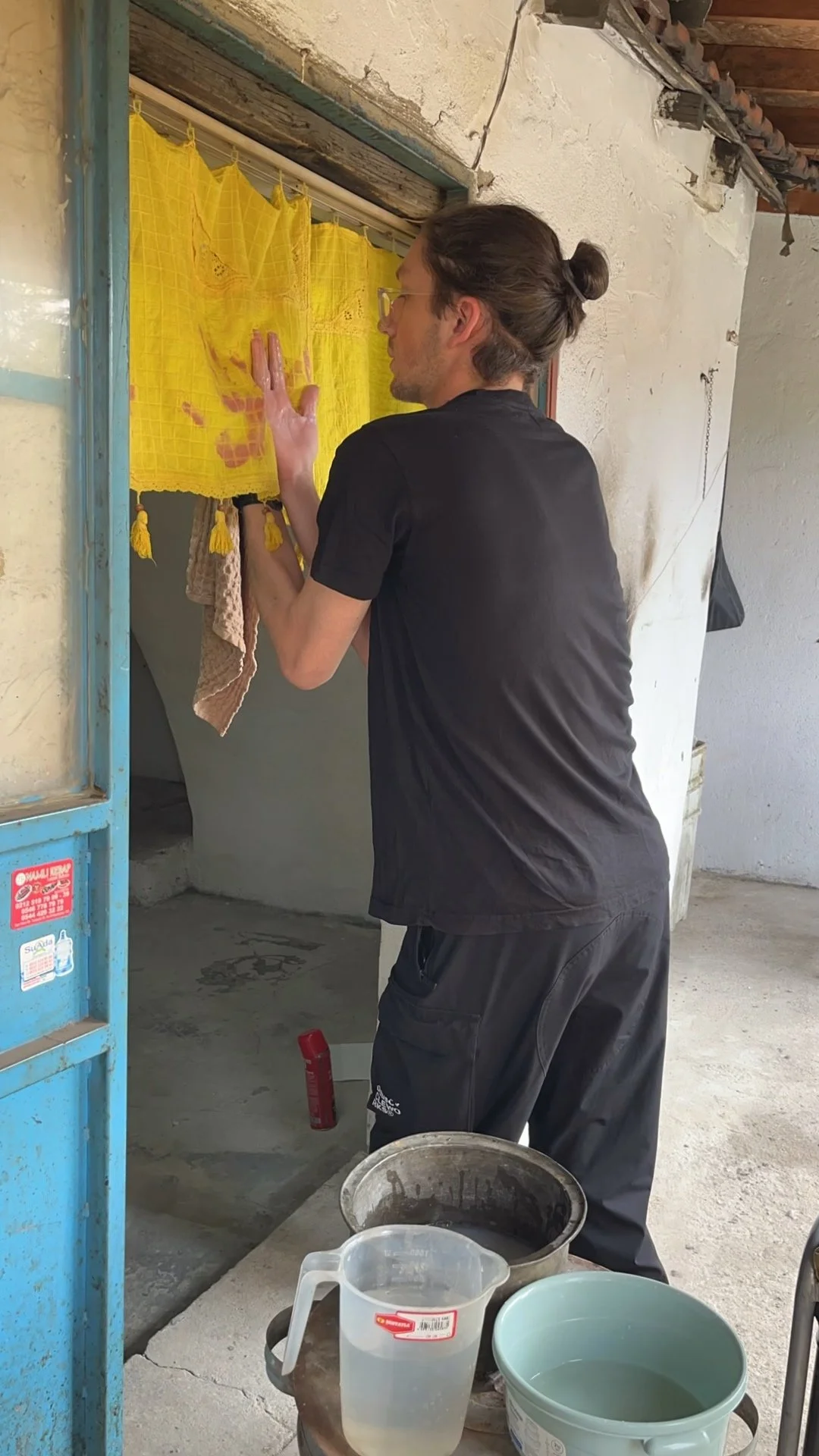
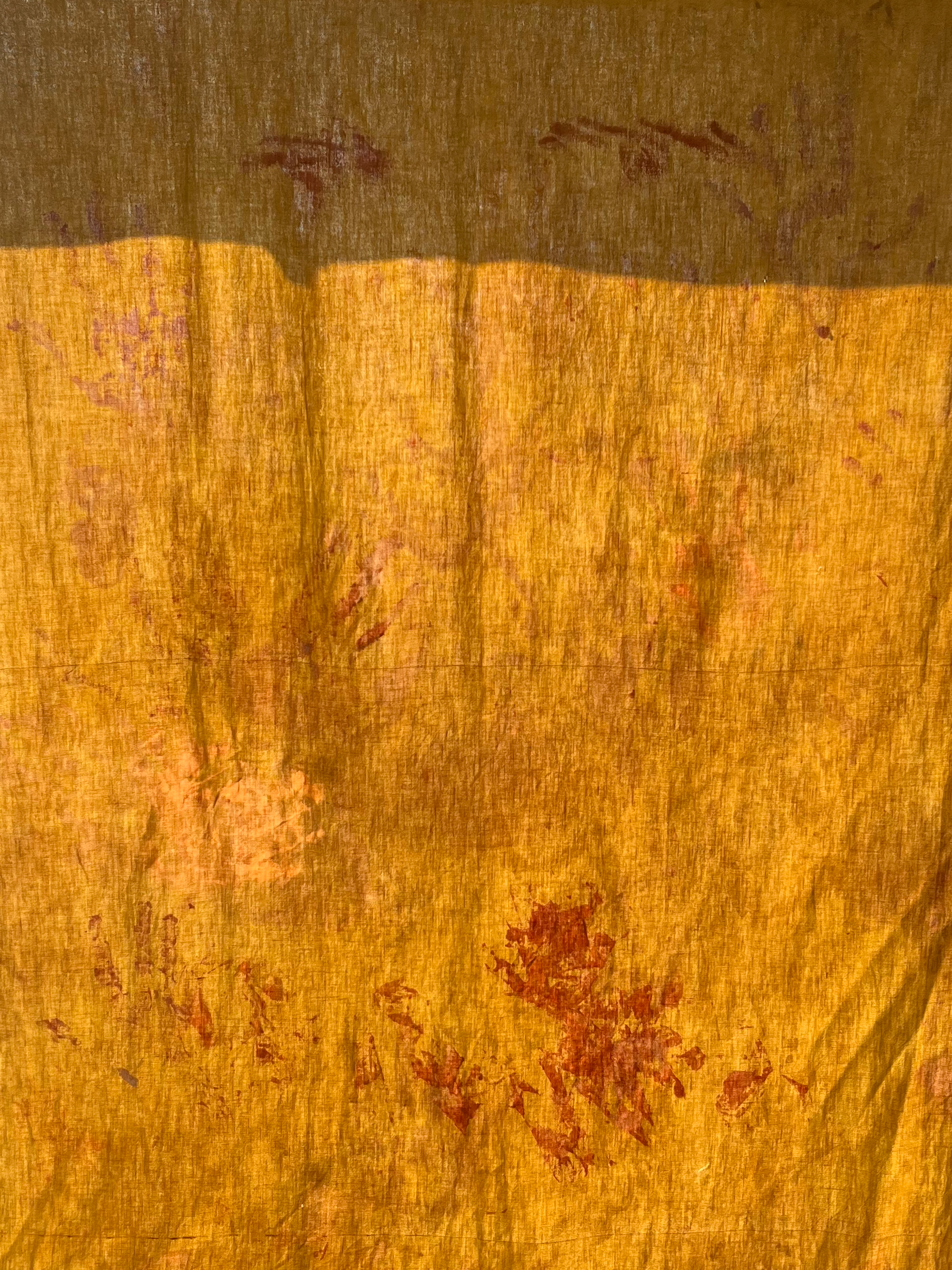
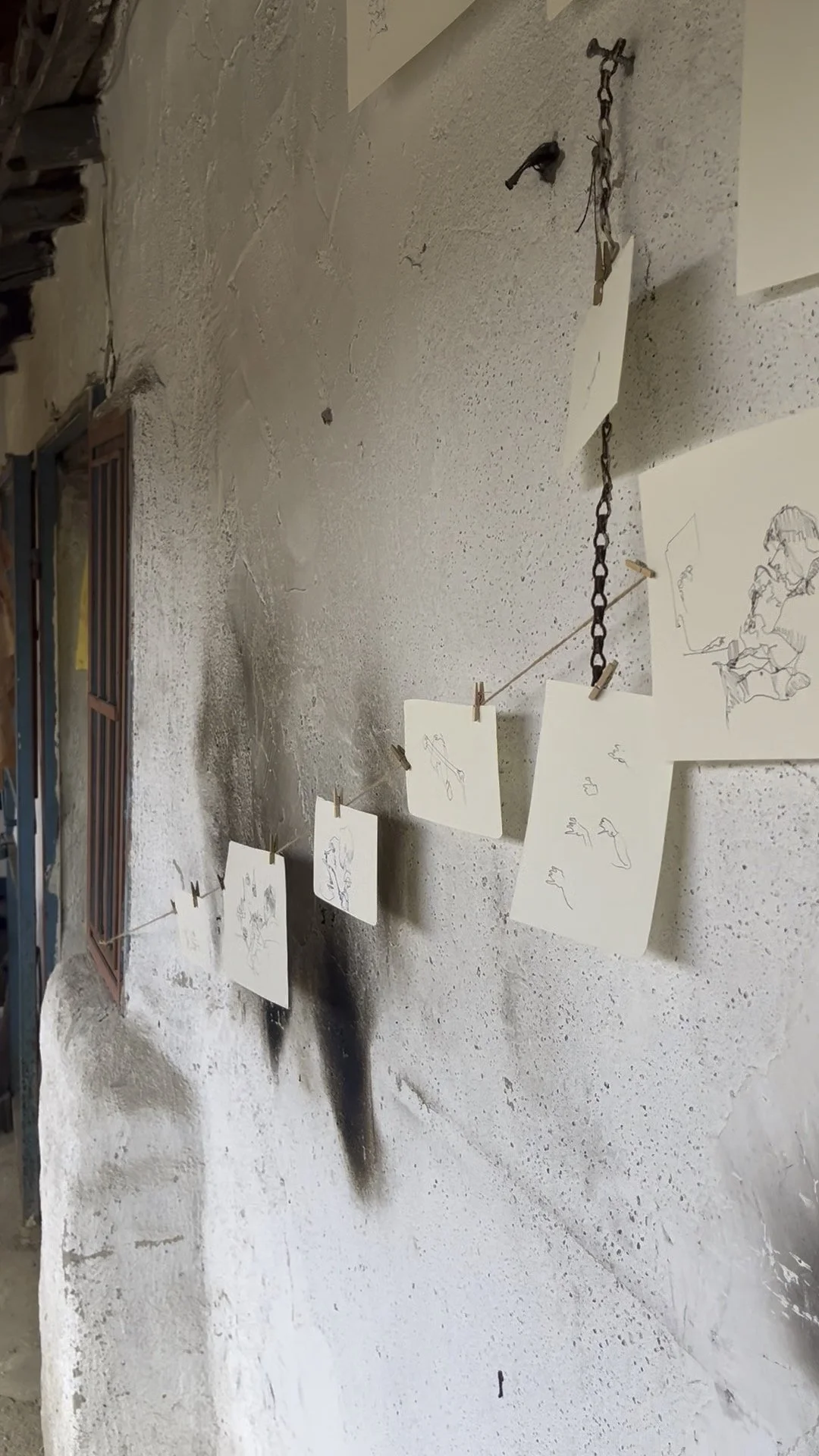
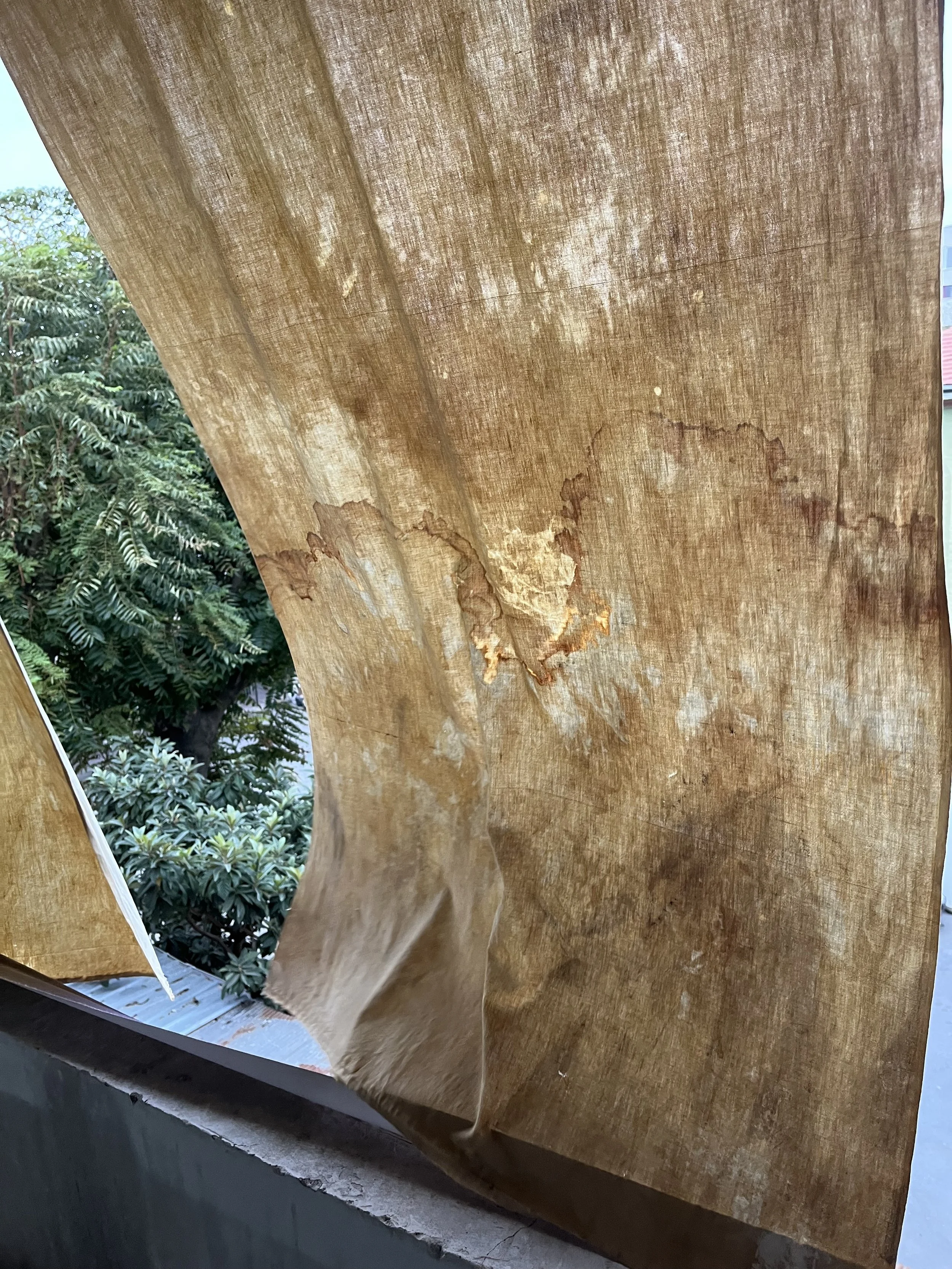
Turmeric is a reactive dye that turns from gold to red when it comes into contact with basic (high pH) substances. During the festival opening visitors were invited to apply soap to the curtains with their hands, leaving traces of their touch on the exhibition.
As the festival progressed, the dye faded in the sun and ran in the rain, losing its reactivity and fading into a raw motif of discoloration and fading.
-
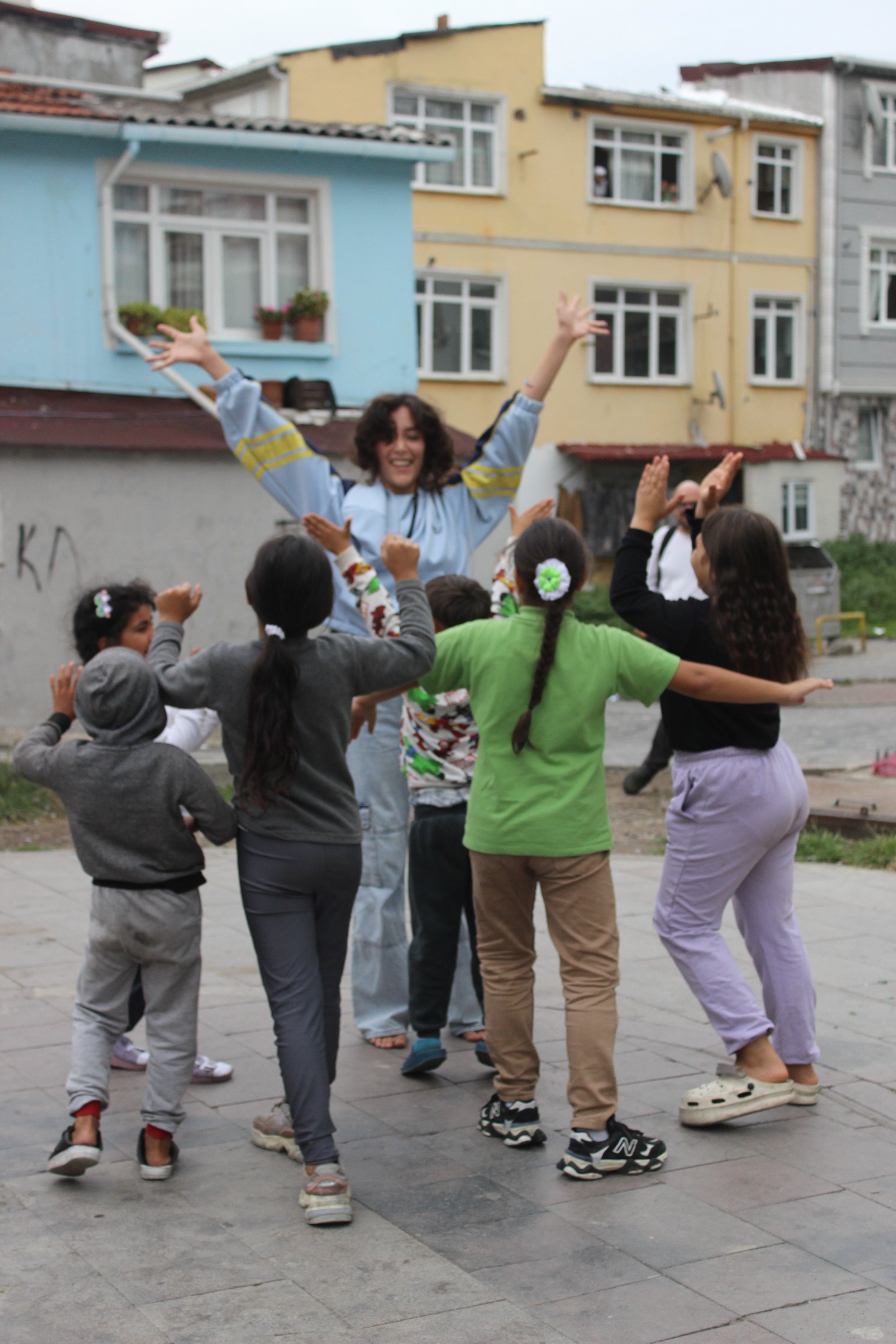
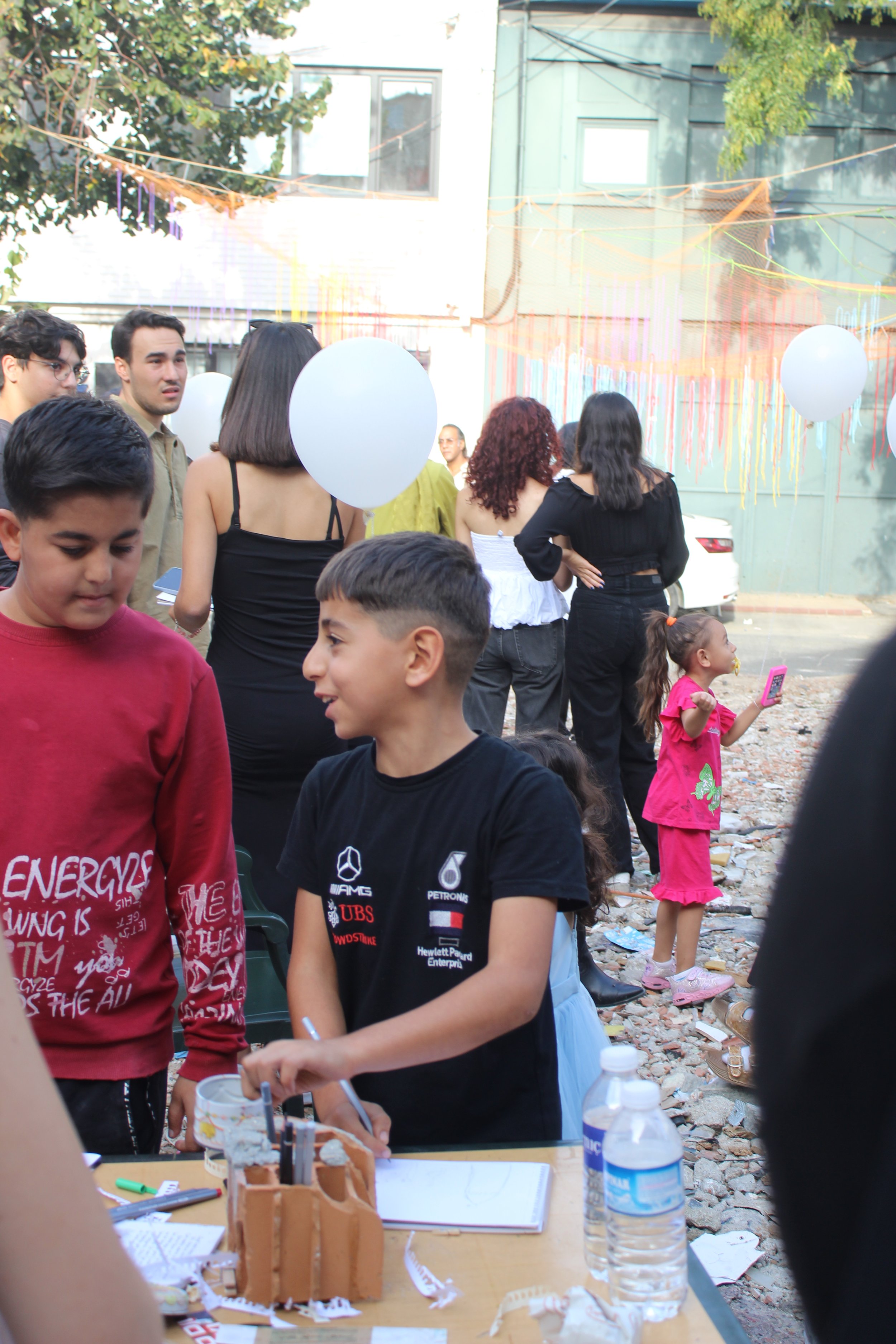
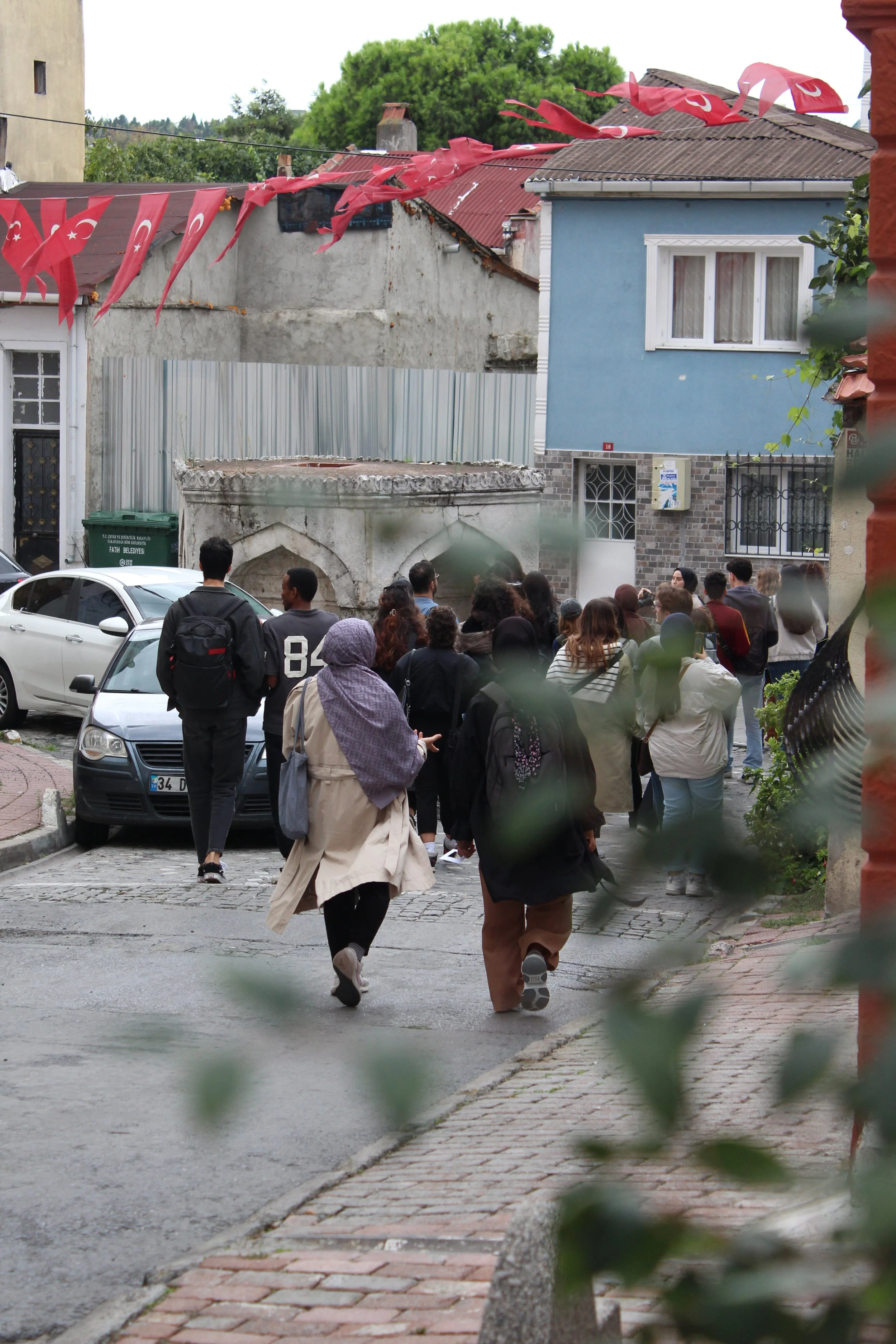
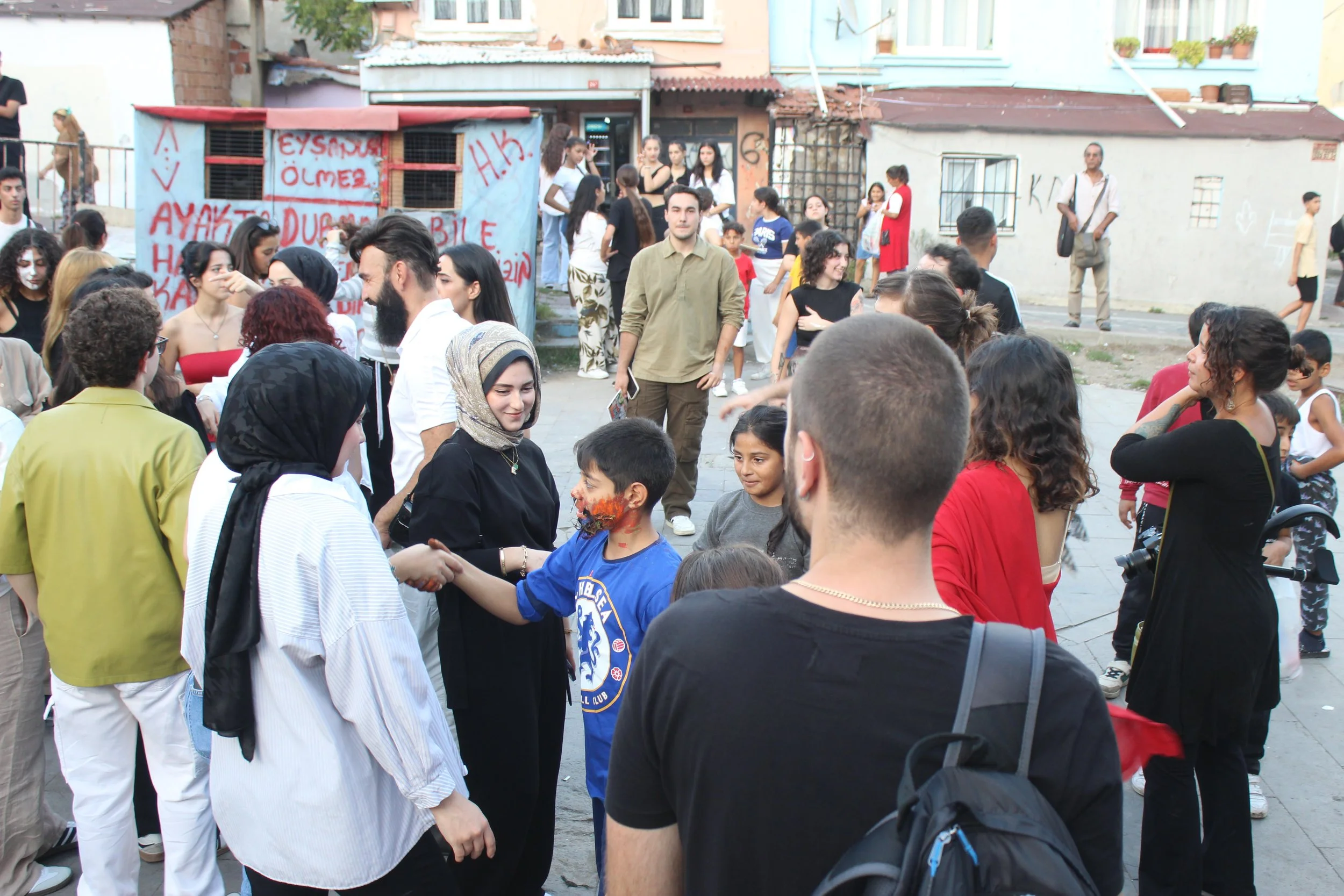
A week-long workshop with a group of performance artists and musicians led to an hour-long performance through the streets of an often-overlooked neighborhood of Istanbul.
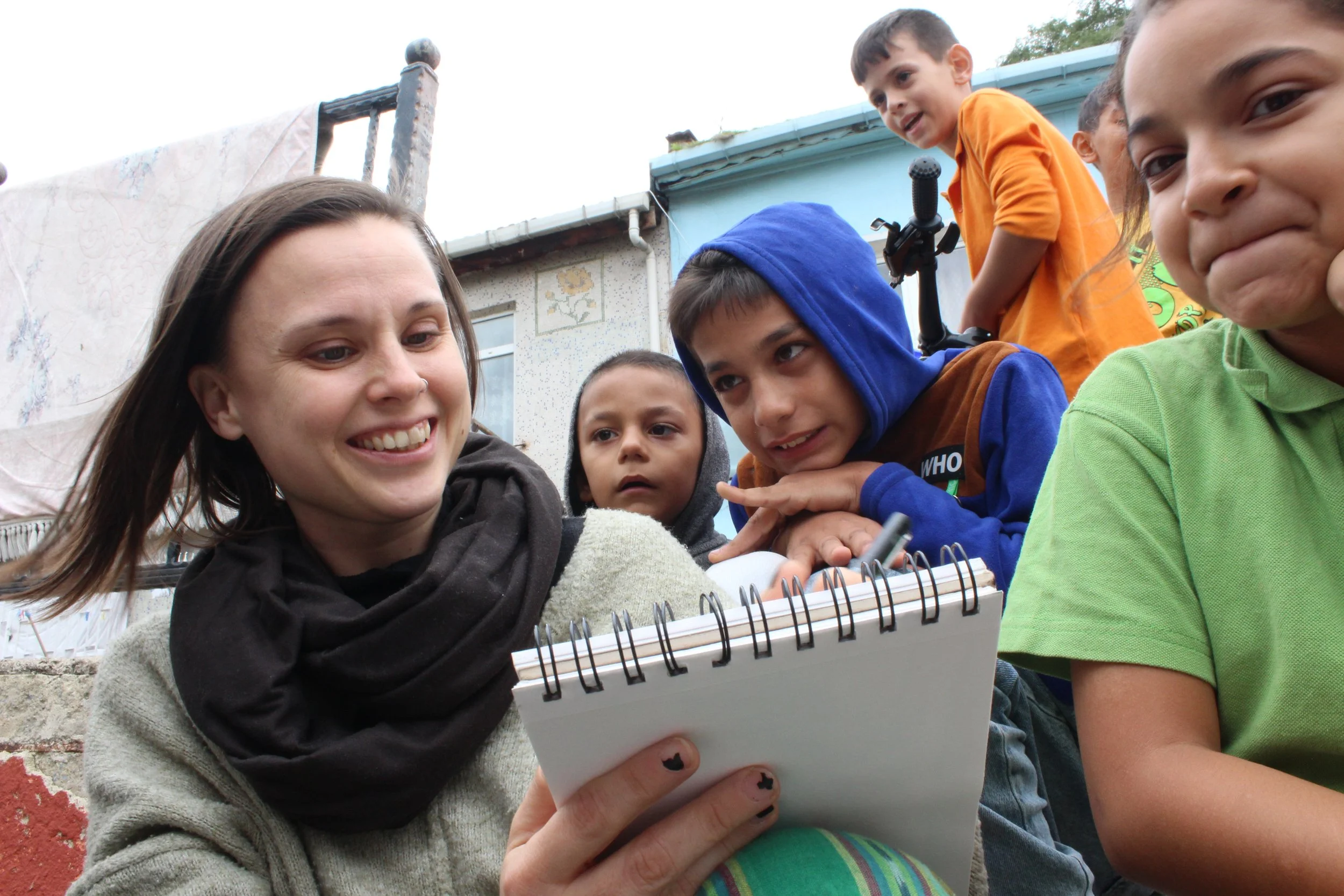
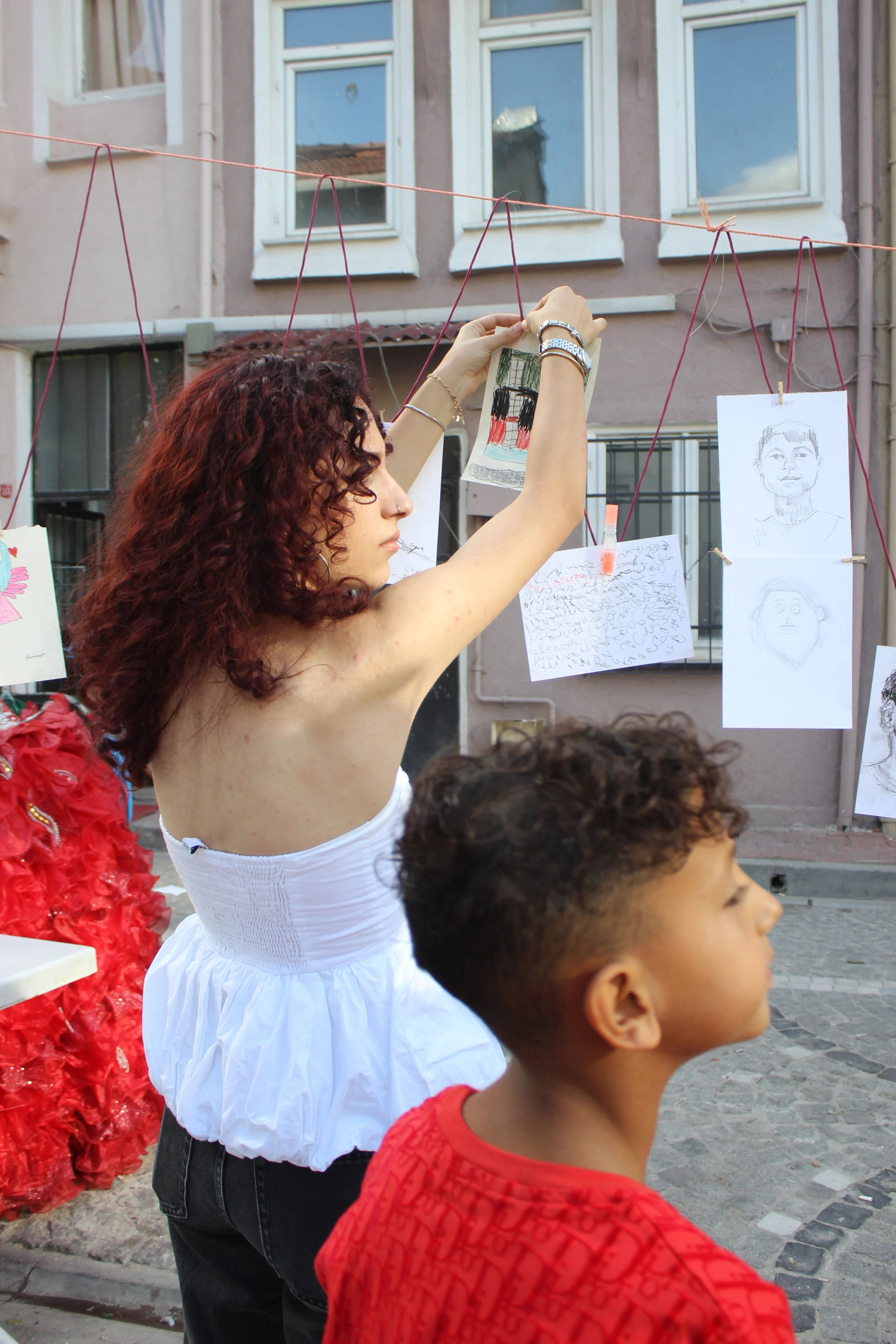
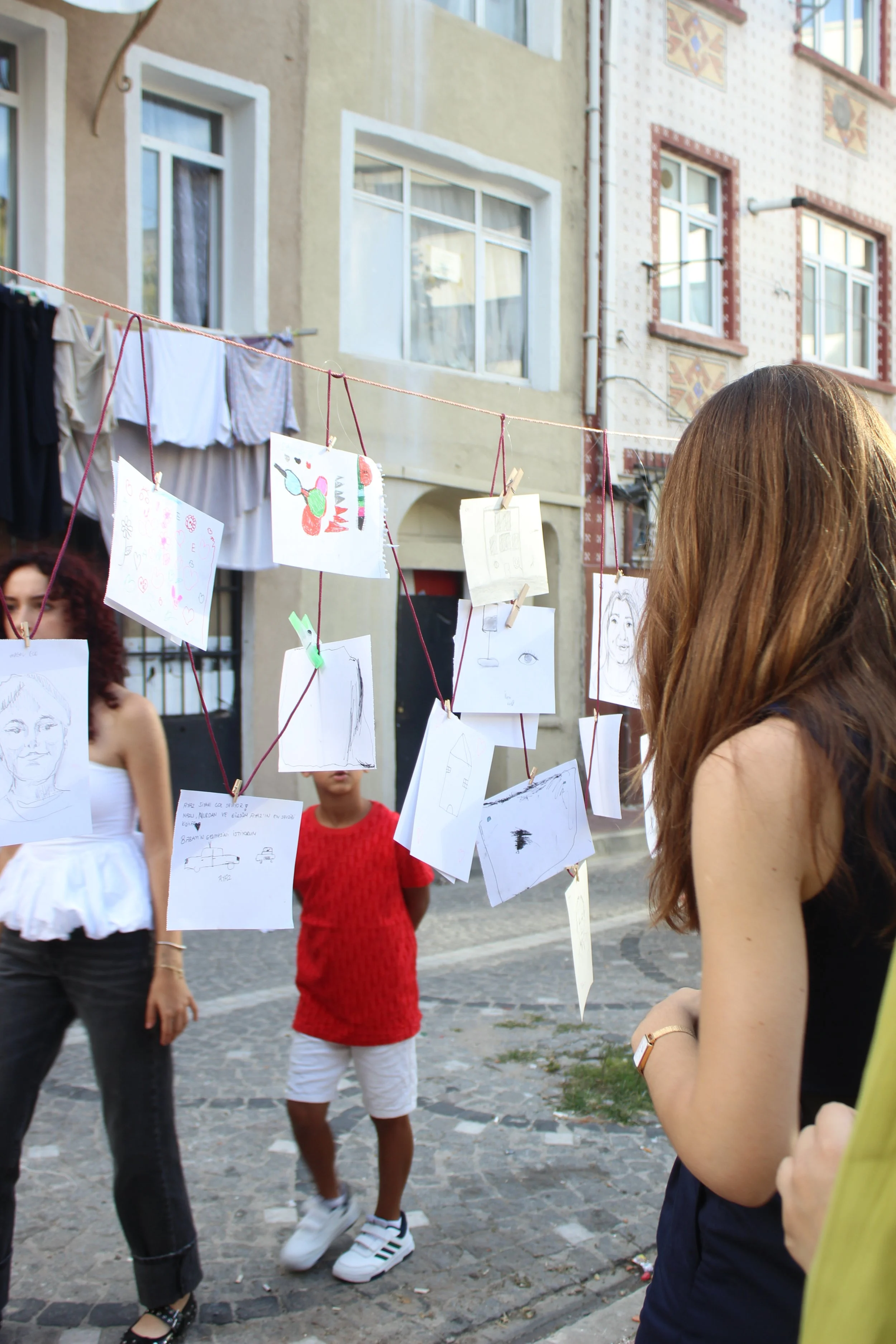
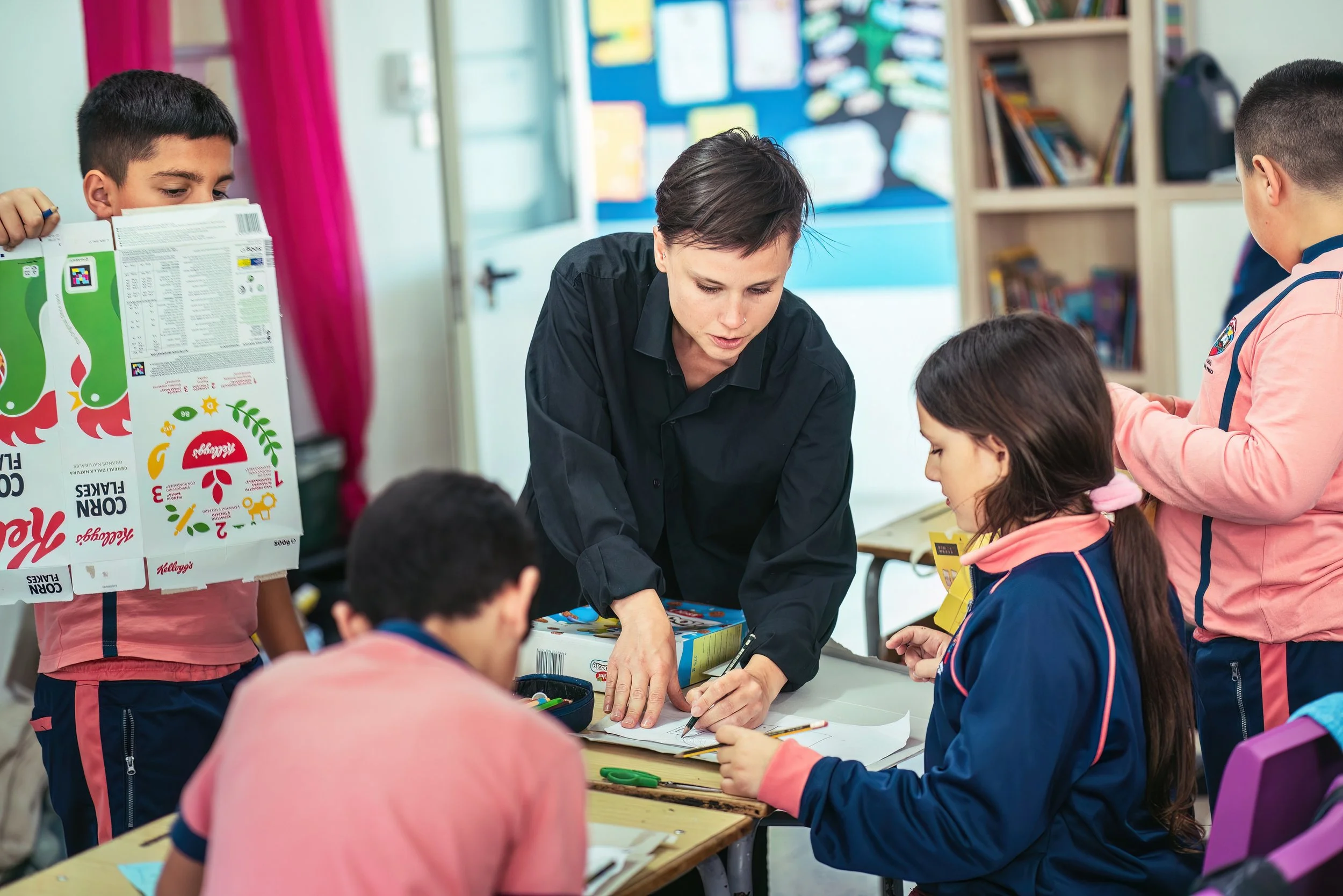
The first days of the workshop were intensive field research, wandering through the streets and looking for inspiration. Everything felt very voyeuristic until a group of local children began to follow us around, eager to play the instruments and highly interested in my pens and sketches.
My contribution, then, became a short portrait-drawing performance conducted by myself and art students from the local university, where children donated drawings to a temporary “gallery” in the square in exchange for their portrait.
Artist’s Playground was organized by Urban.Koop, Bridgeworks and conducted in collaboration with Istanbul Topkapı Üniversitesi.

-
“Through a year long process of workshops, audit and presentations, the Valletta community…is vocalising their concerns to resonate with the general public, in an attempt to empower and strengthen their position in society, by means of this artistic process.“
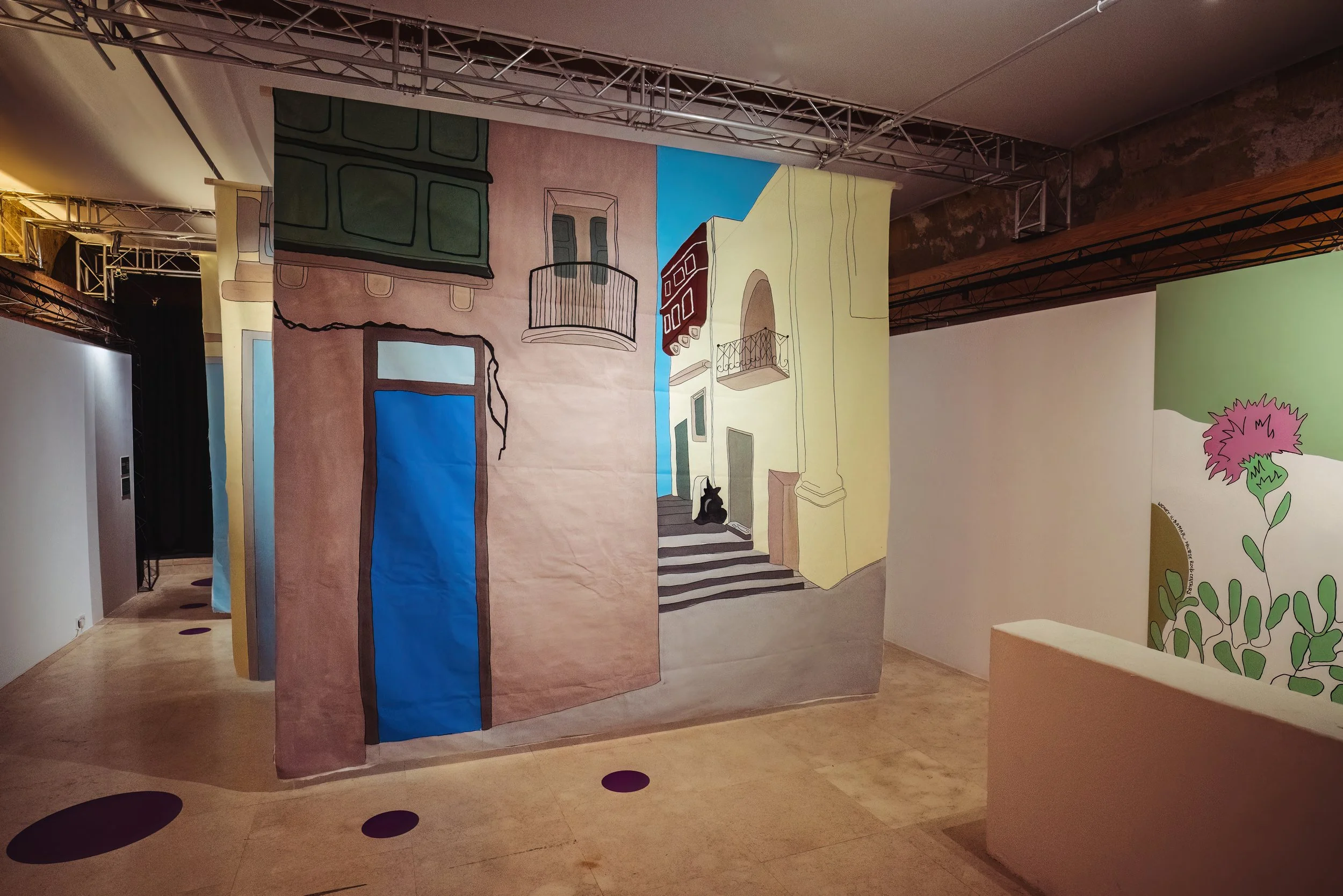
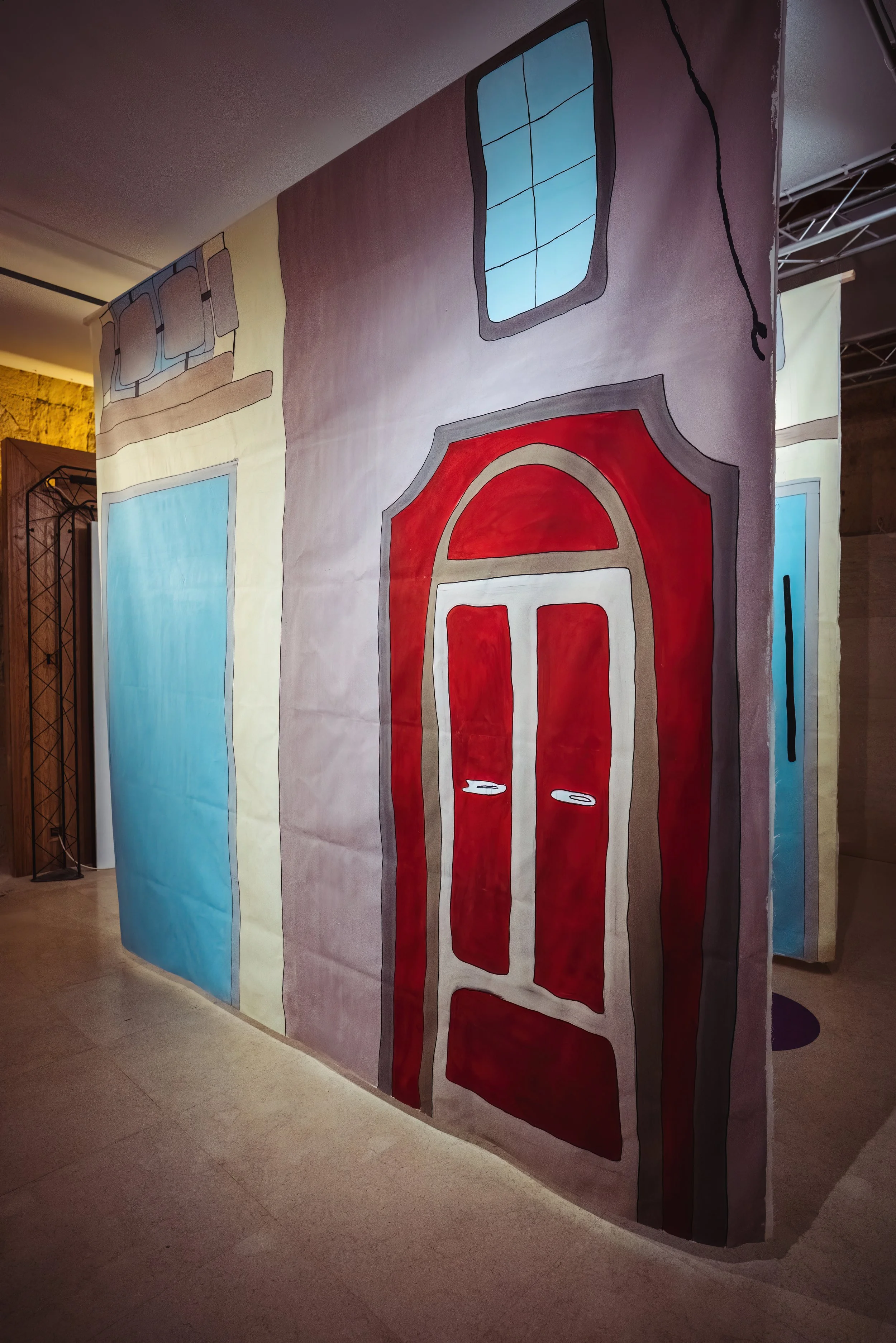
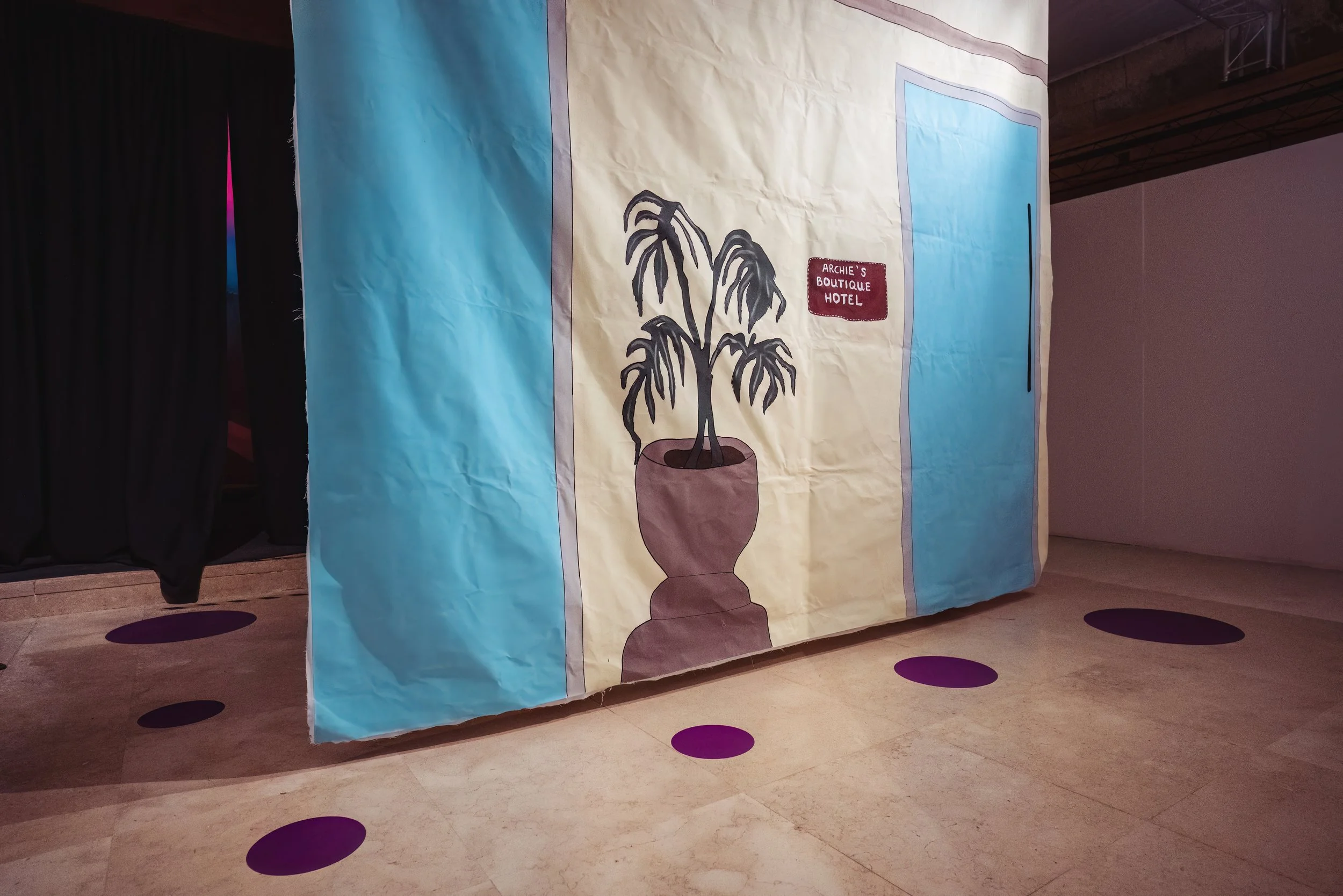
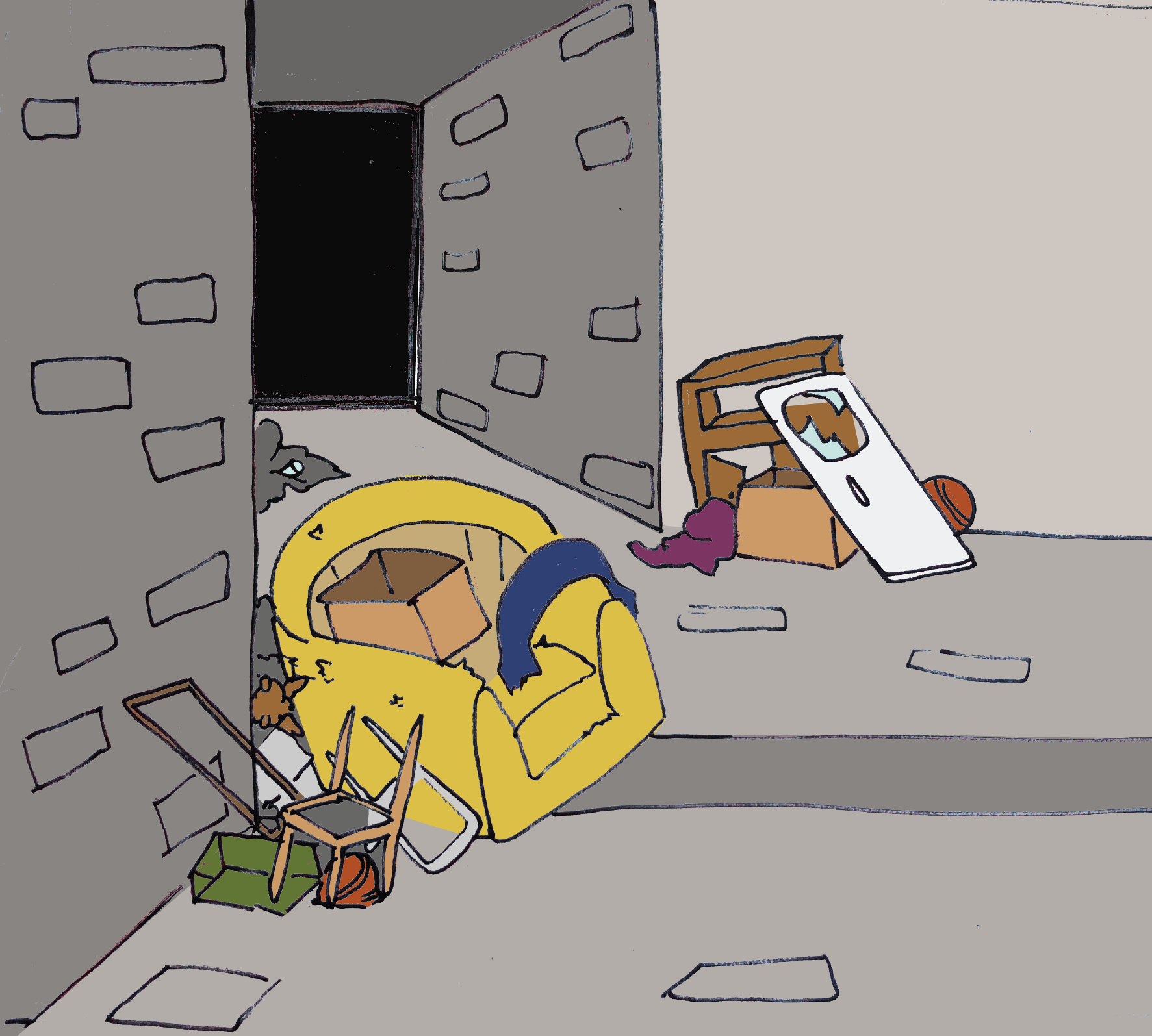
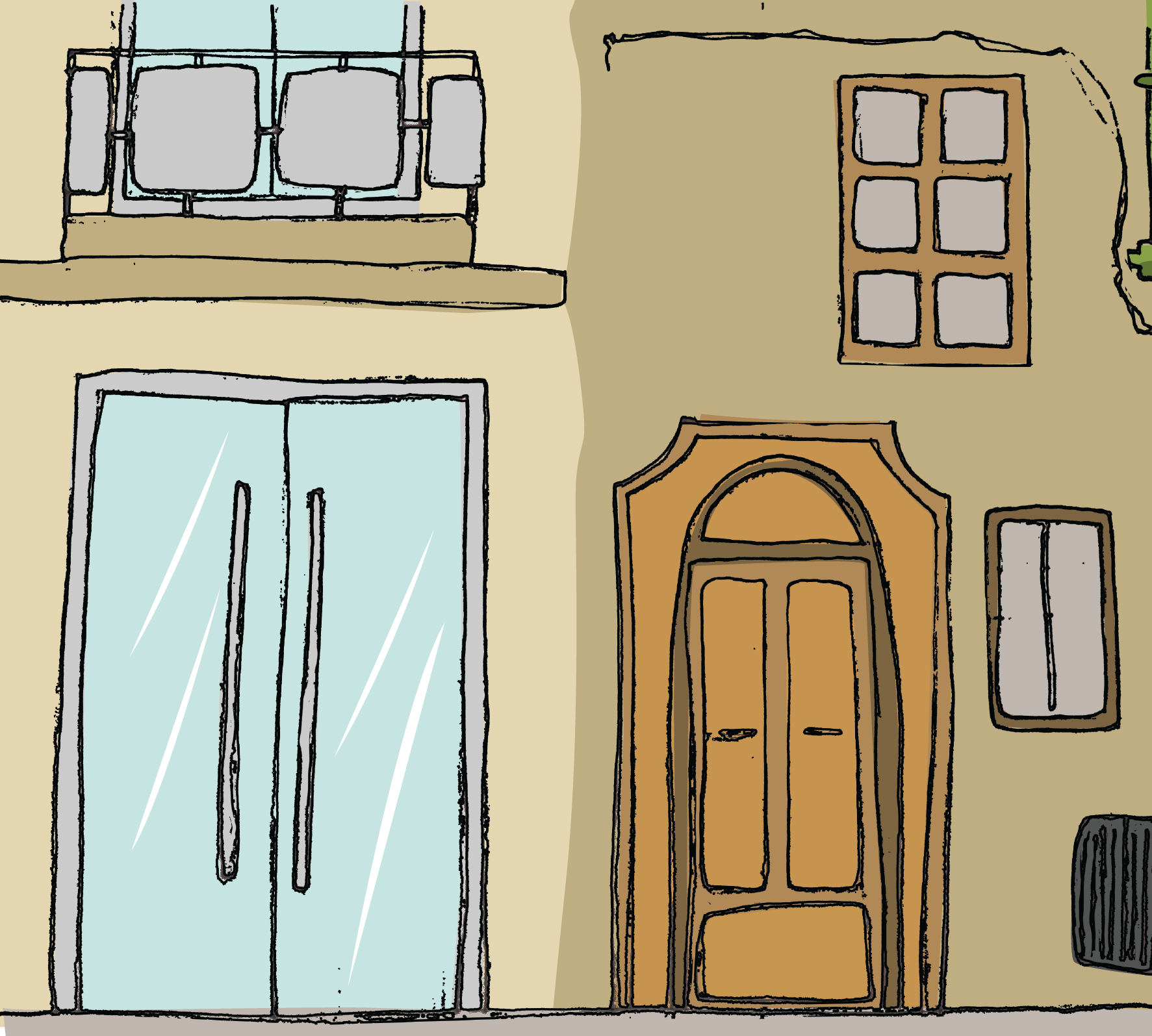
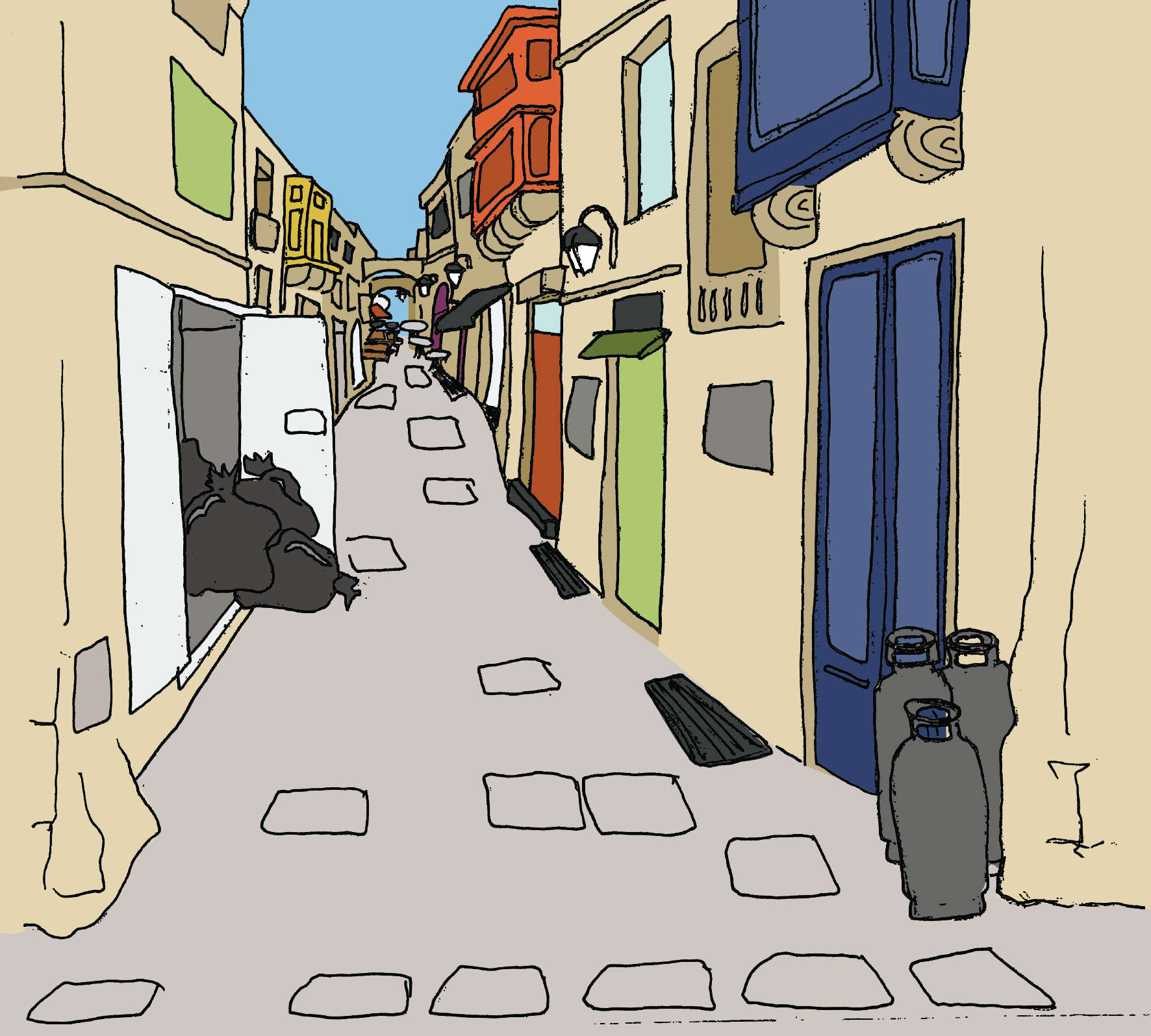
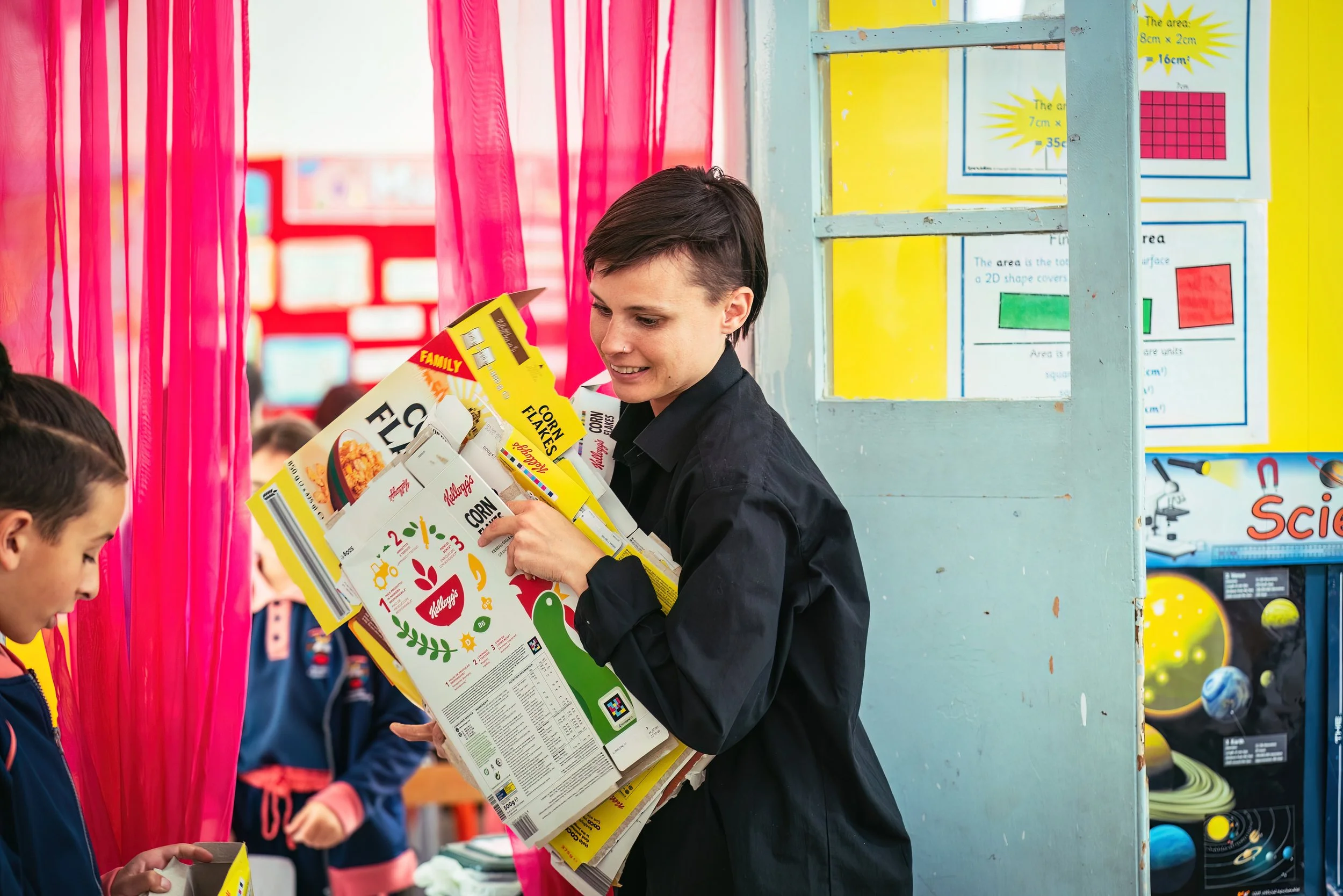
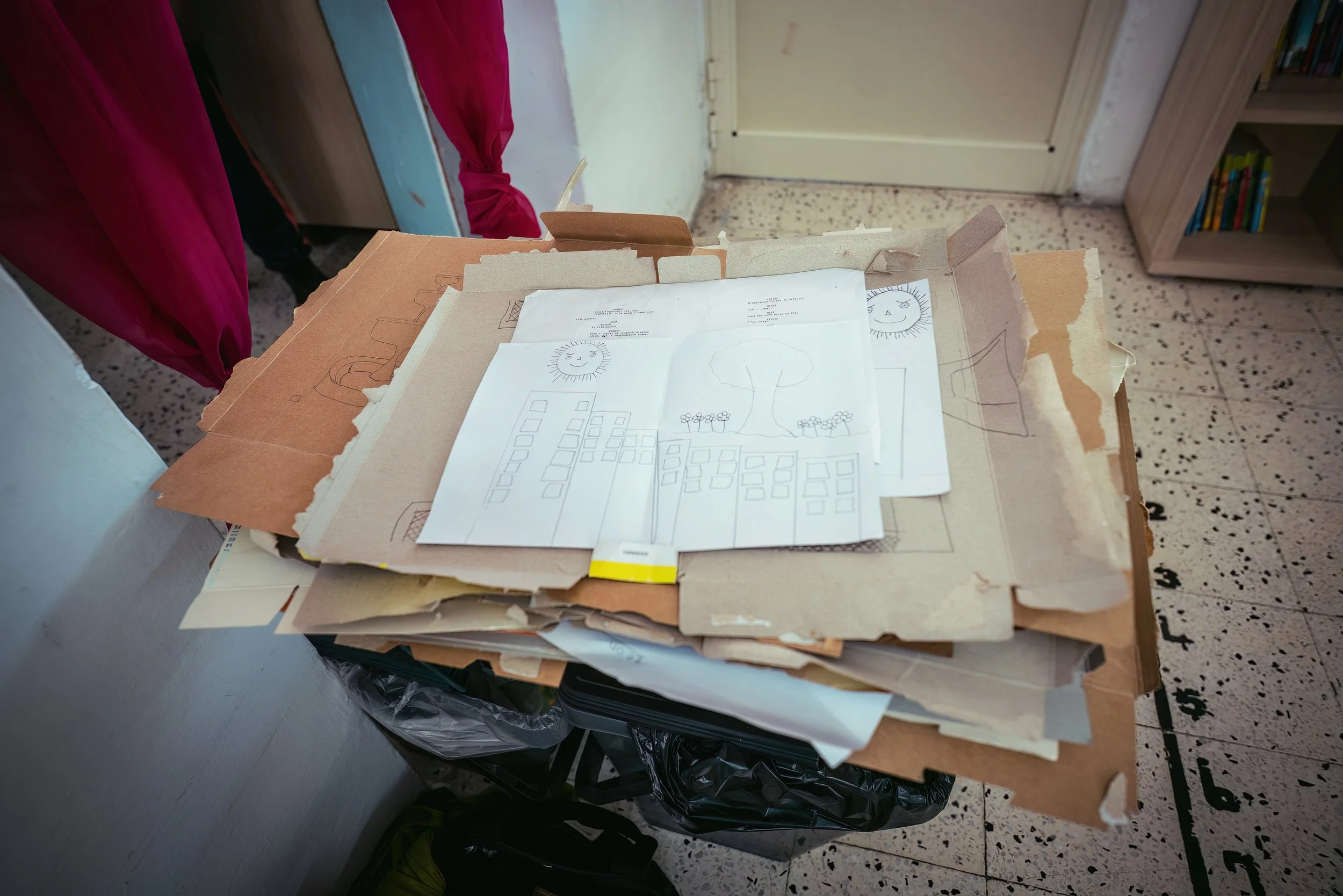
The organizer of Vucijiet Beltin commissioned me to design sets for a play written by primary school students and directed by a local theatre troupe. The backdrops showed recognizable places in Valletta and were designed to reflect both the children’s visual language (established during my Lost Paper City workshop) and the city’s urban vernacular.
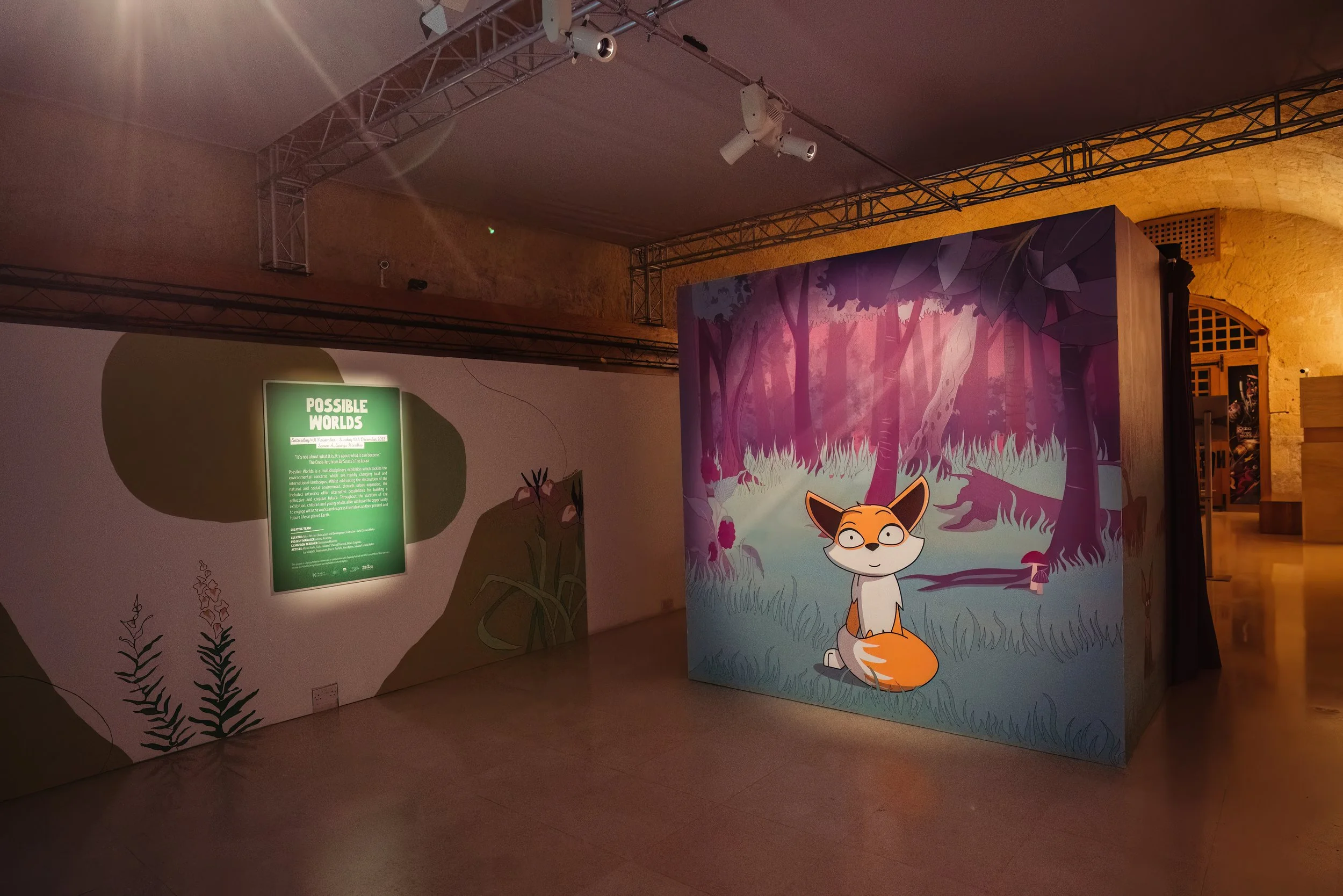
The set designs were used during the performance of Kaju as part of Science in the City in September 2023. They were then exhibited at Spazju Kreattiv as part of Possible Worlds, solidifying a collaboration between local organizations and inspiring a workshop on upcycled theatre costume design.

-
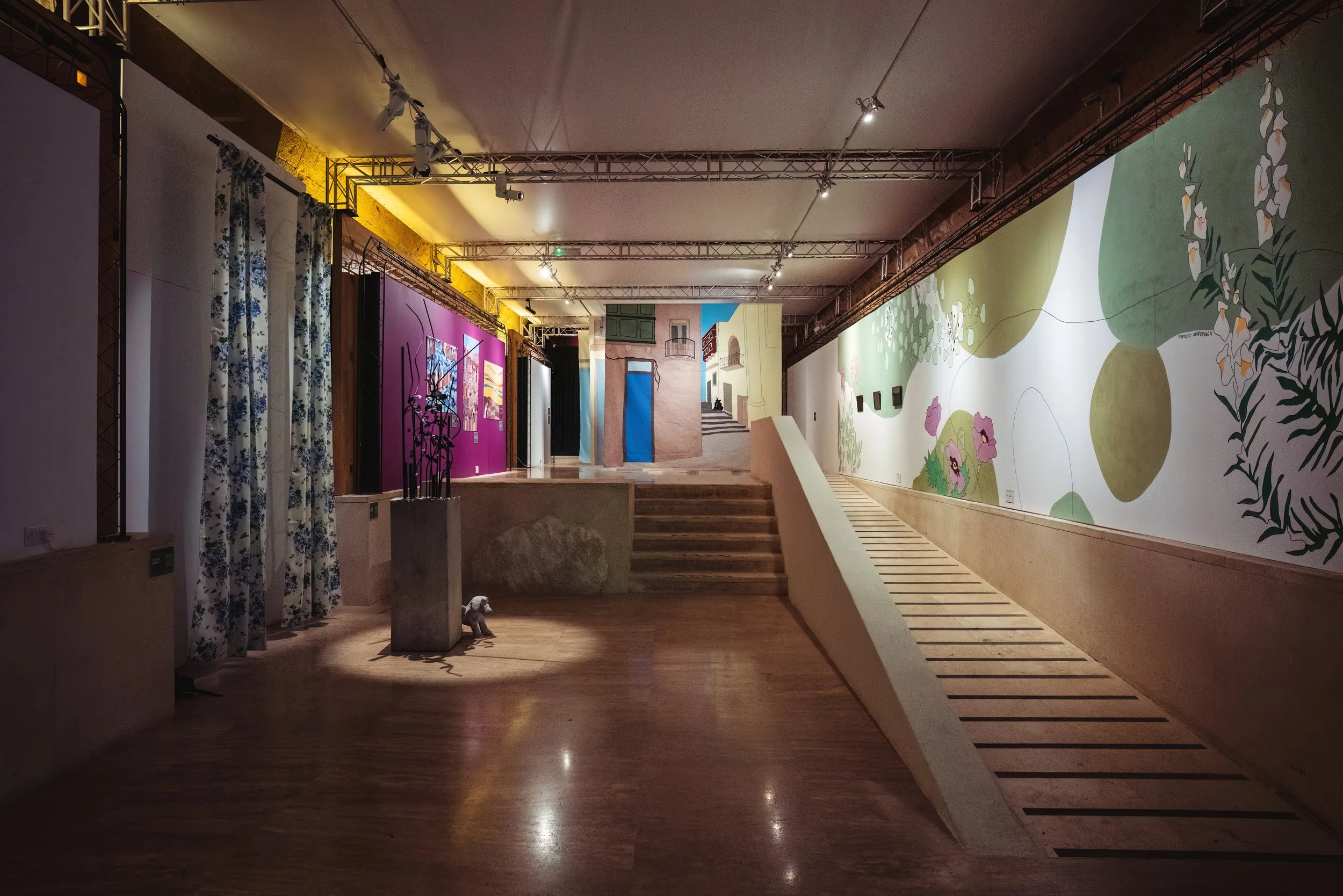
exhibition wall paintings, latex paint on panel
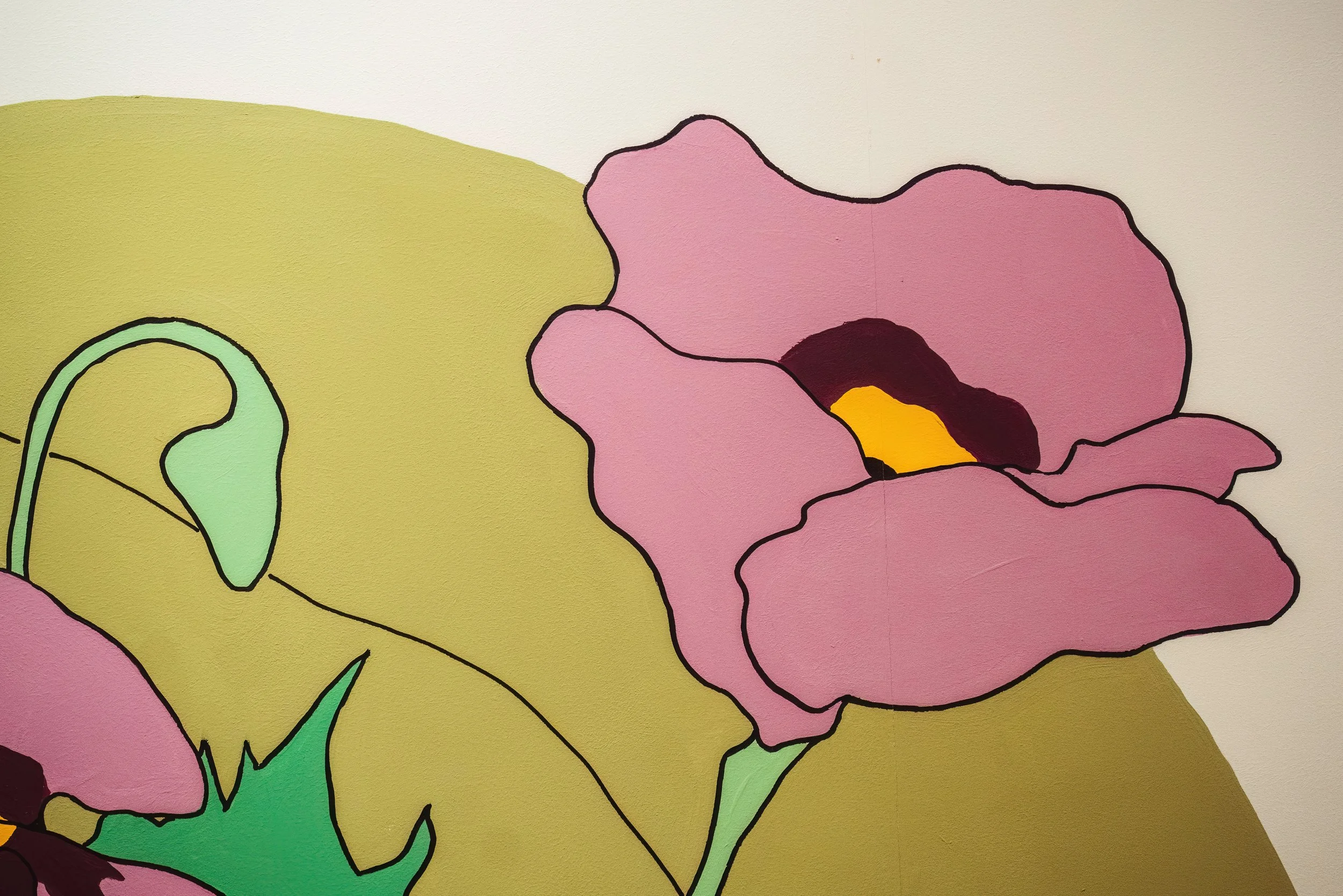
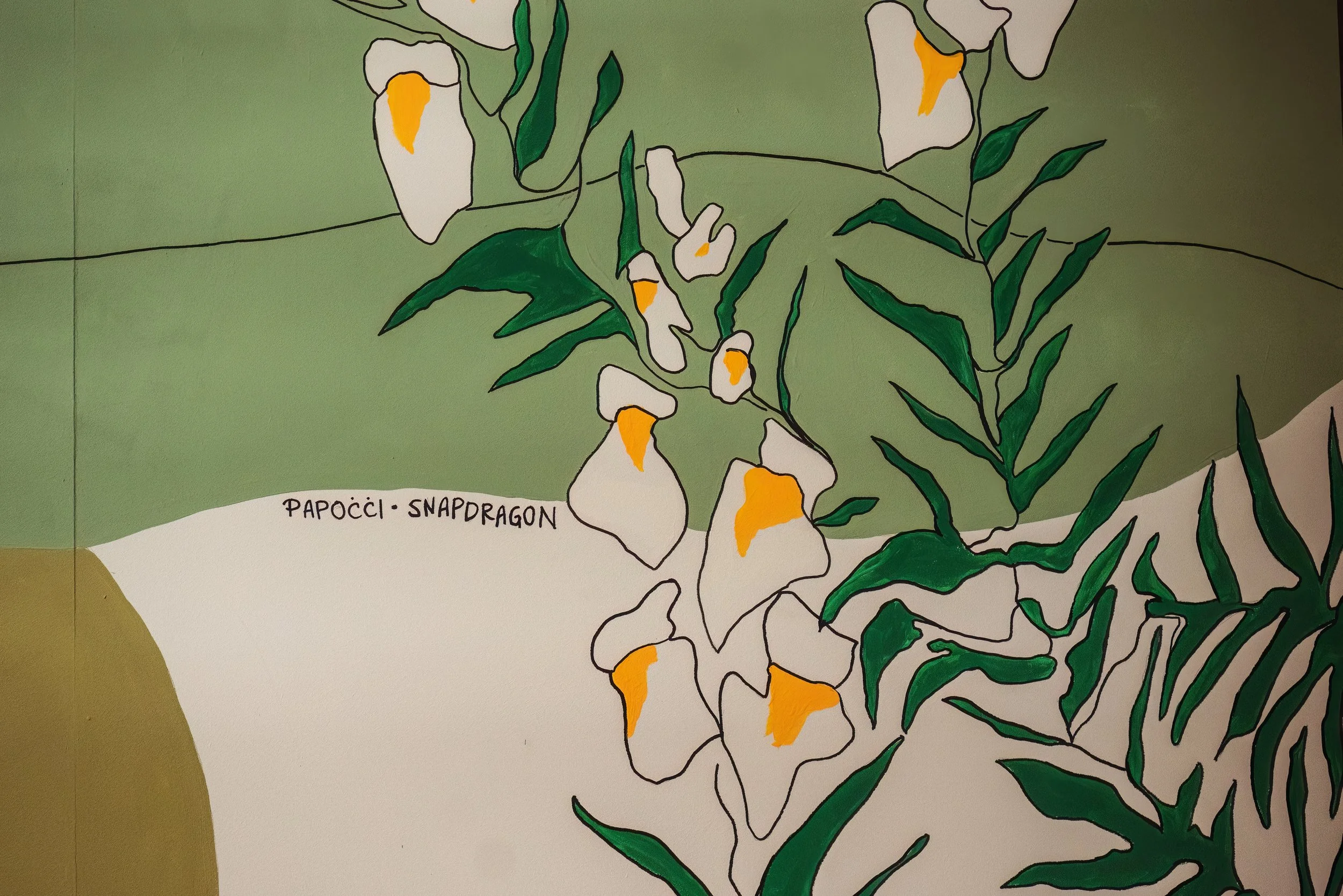
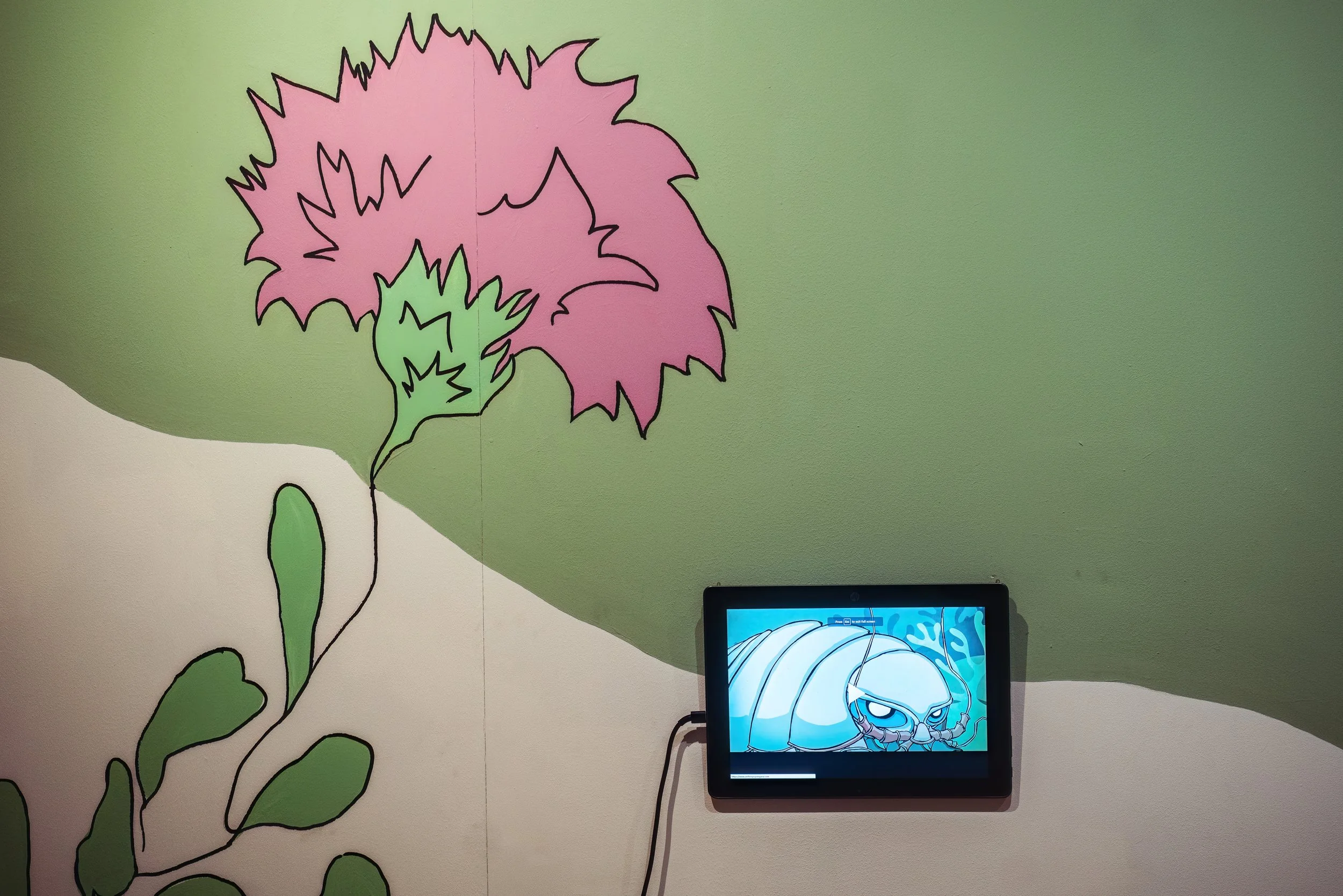
These murals were painted over the course of a week inside Spazju Kreattiv, a contemporary art museum in Valletta, Malta. The pieces served as backgrounds for wall text and interactive exhibition elements. They aimed to familiarise visitors with common Maltese wildflowers, presenting them larger-than-life and glamourised to increase appreciation and offer an alternative view of flowers that are easily overlooked.
180x480 cm & 180x960cm
-
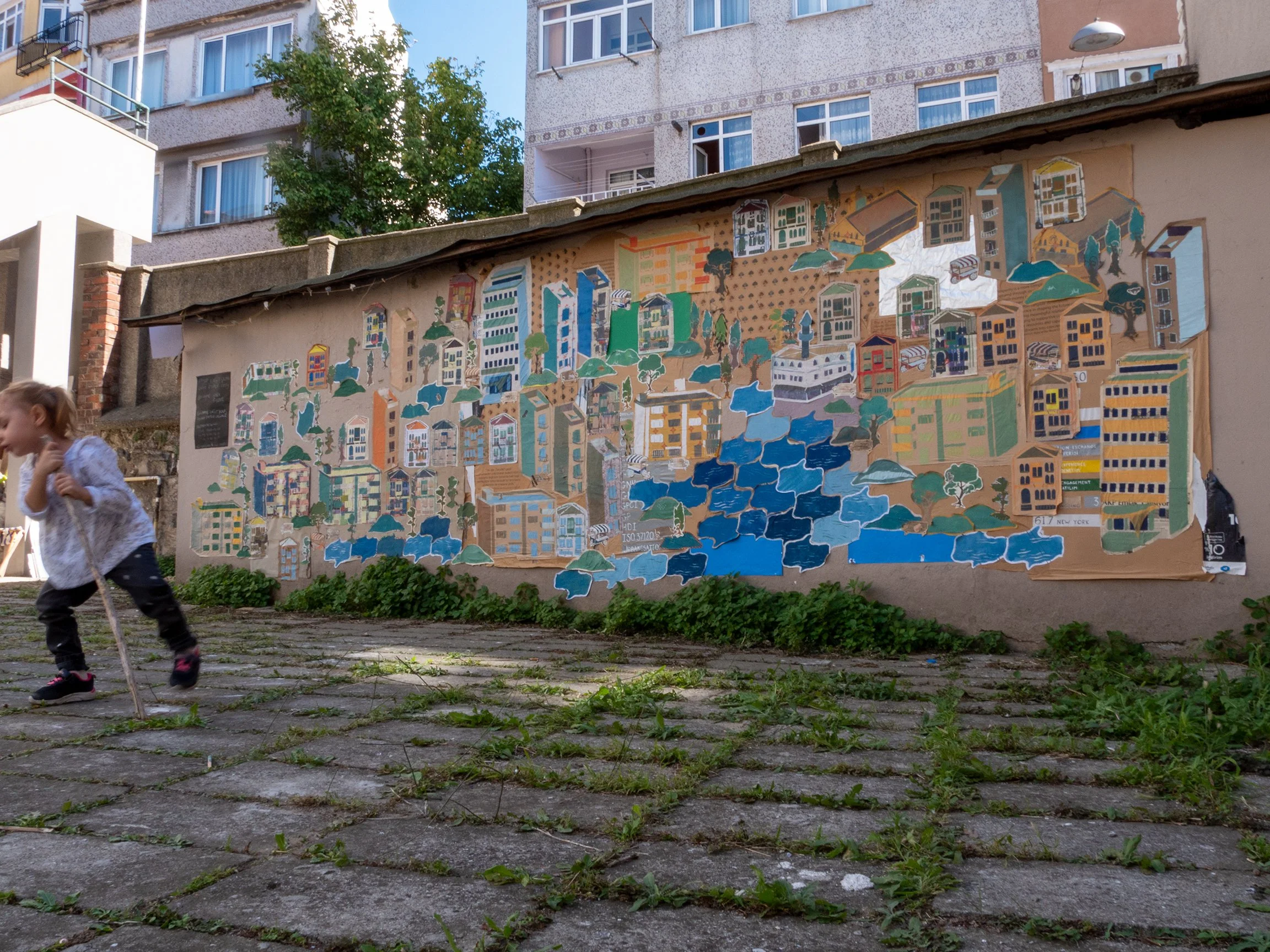
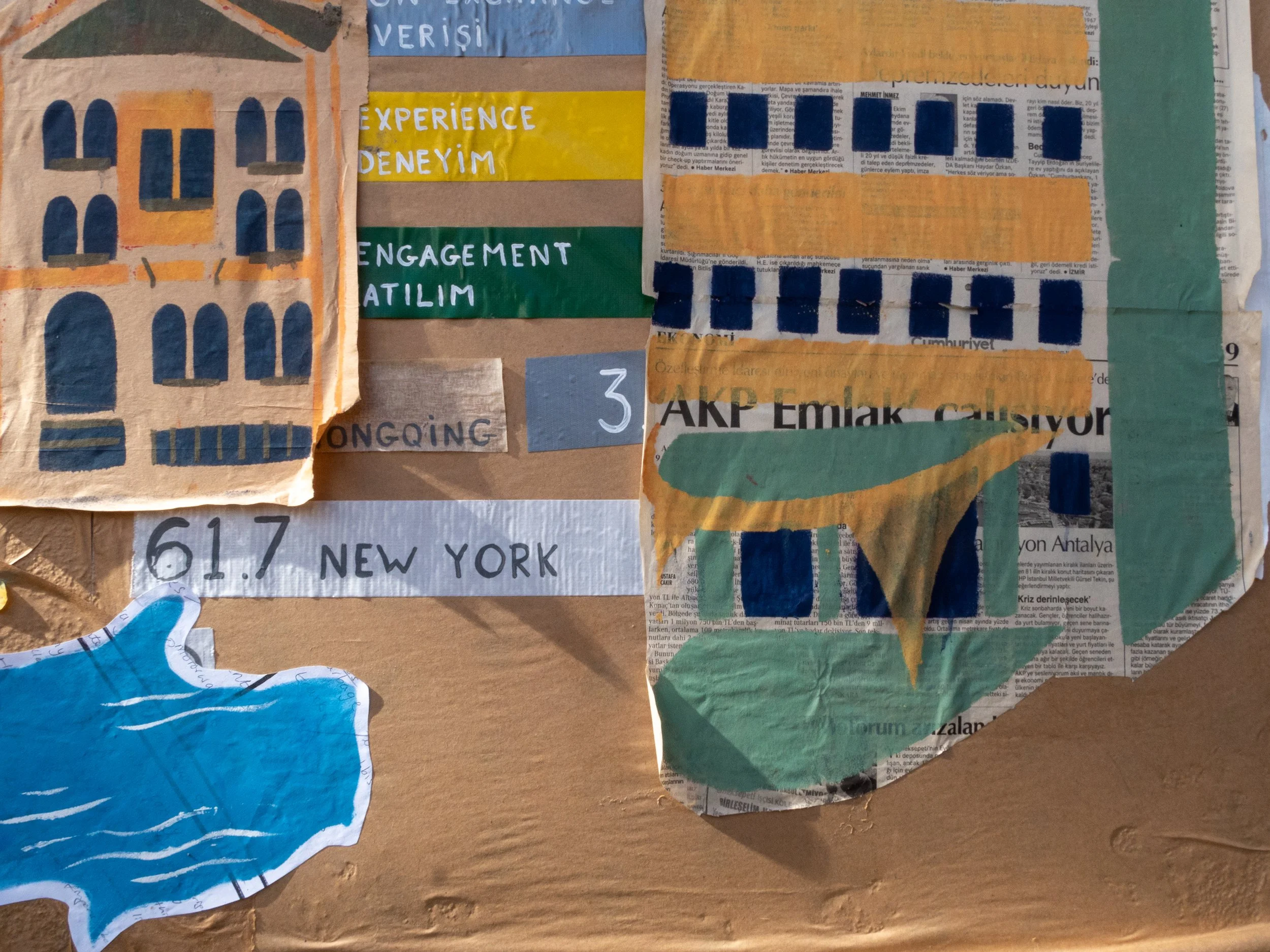
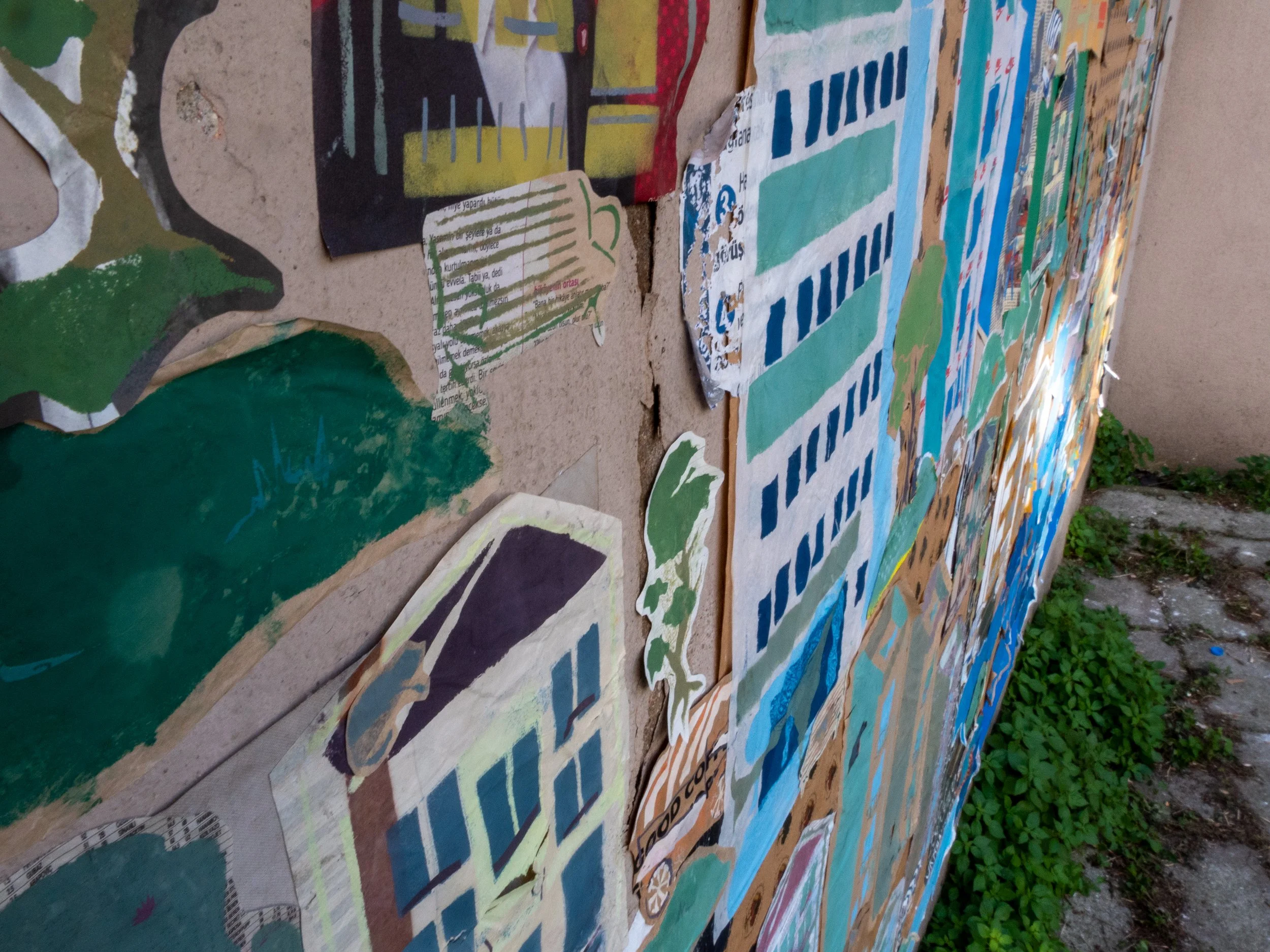
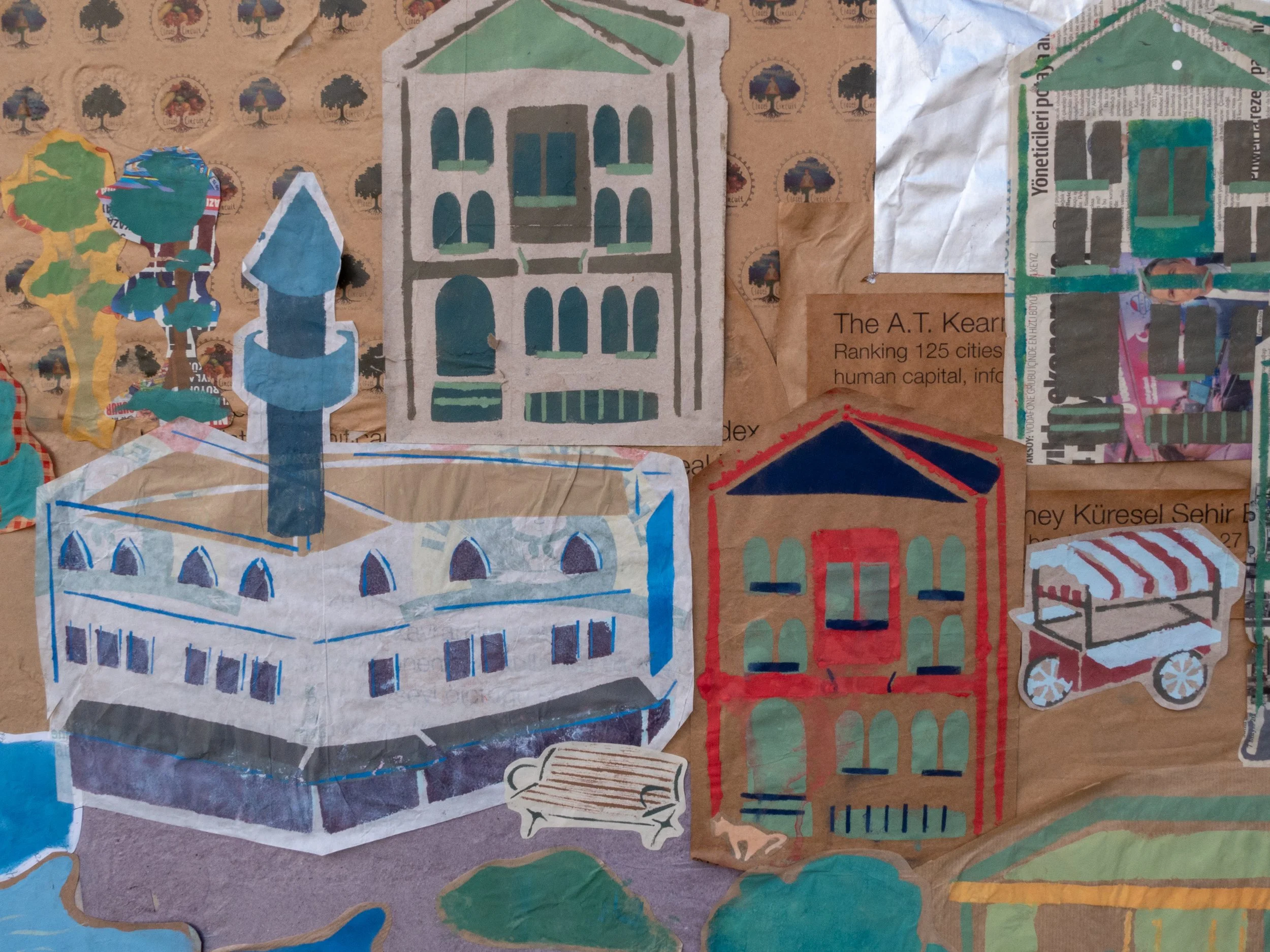
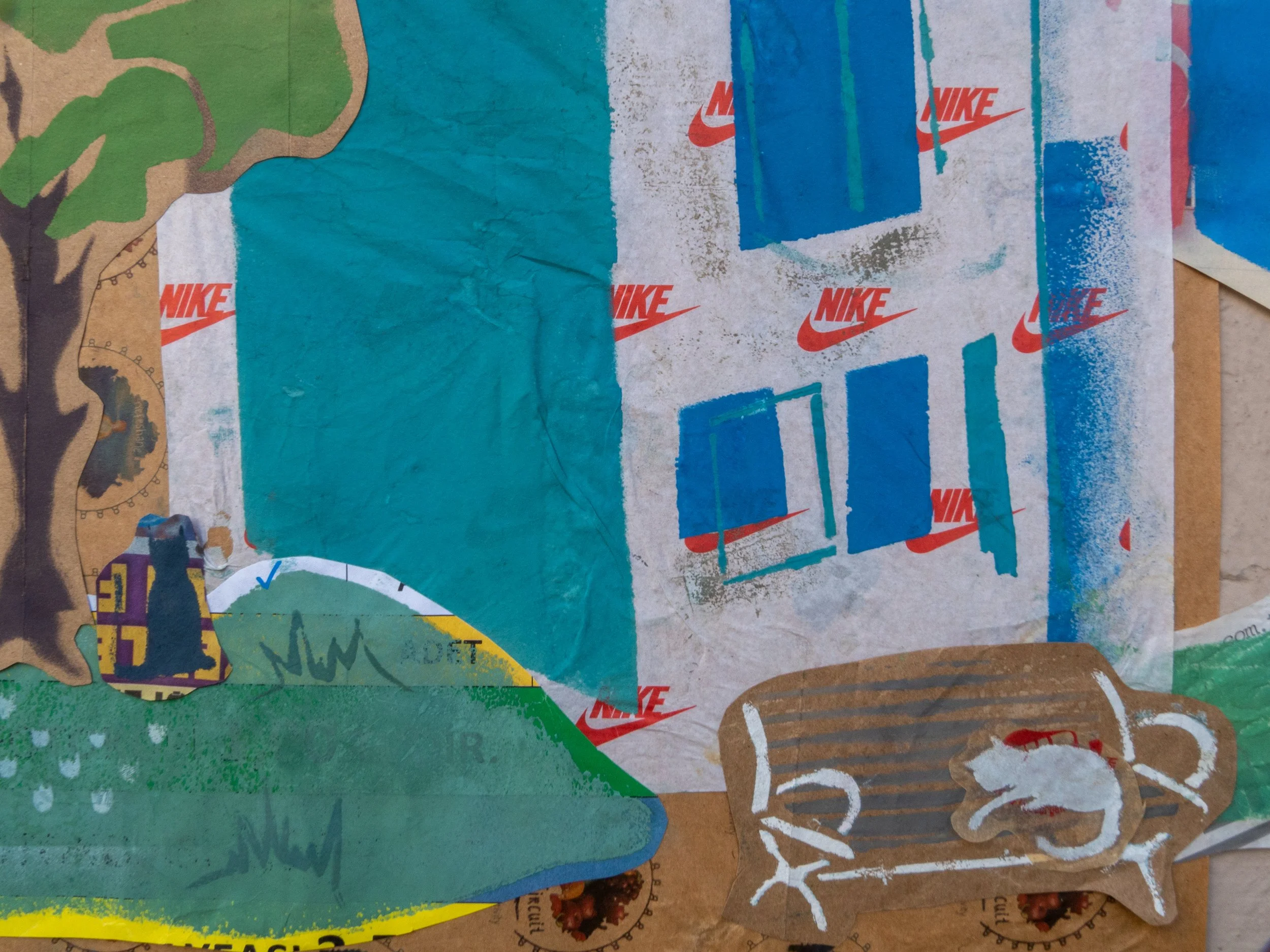
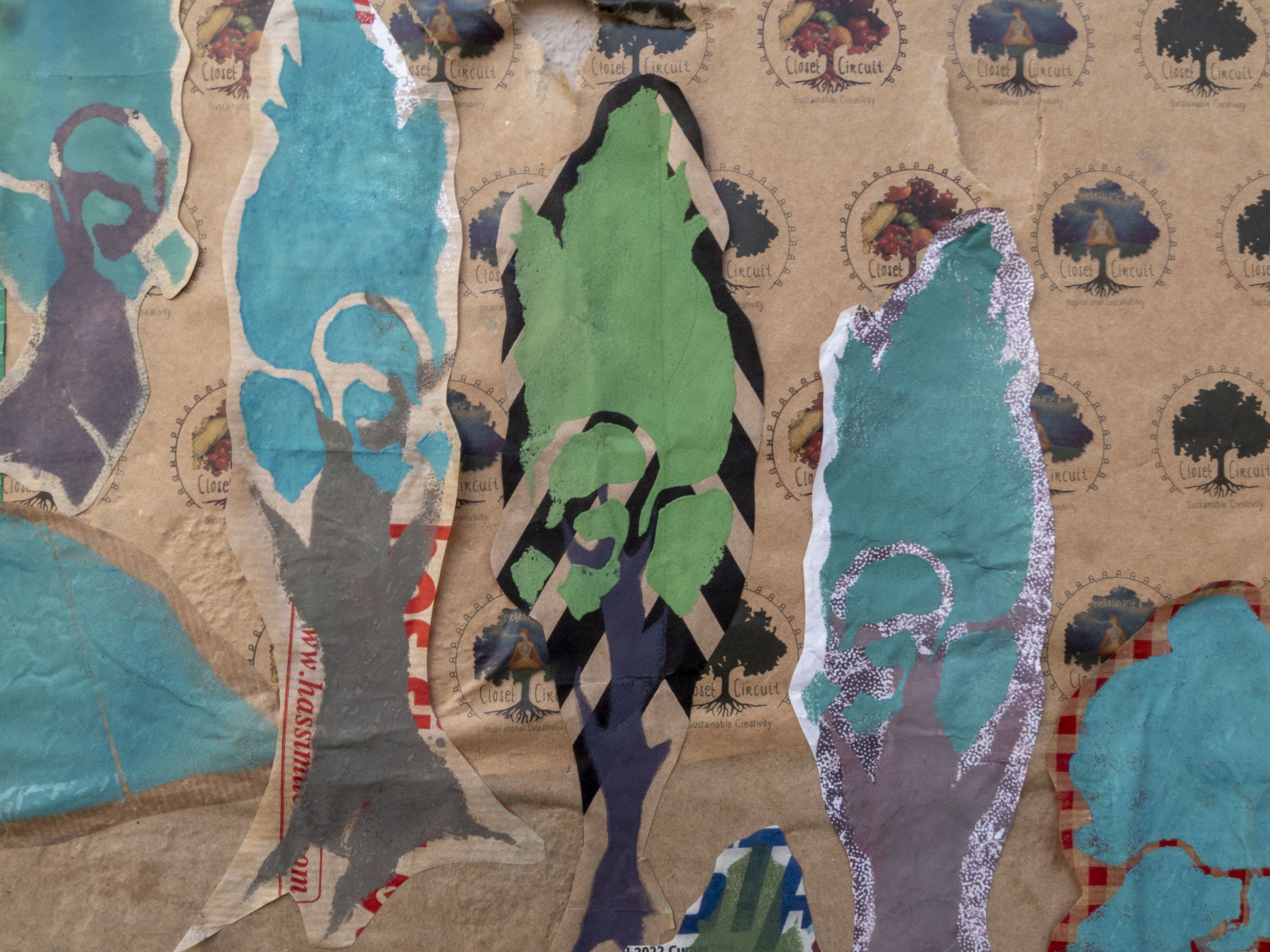
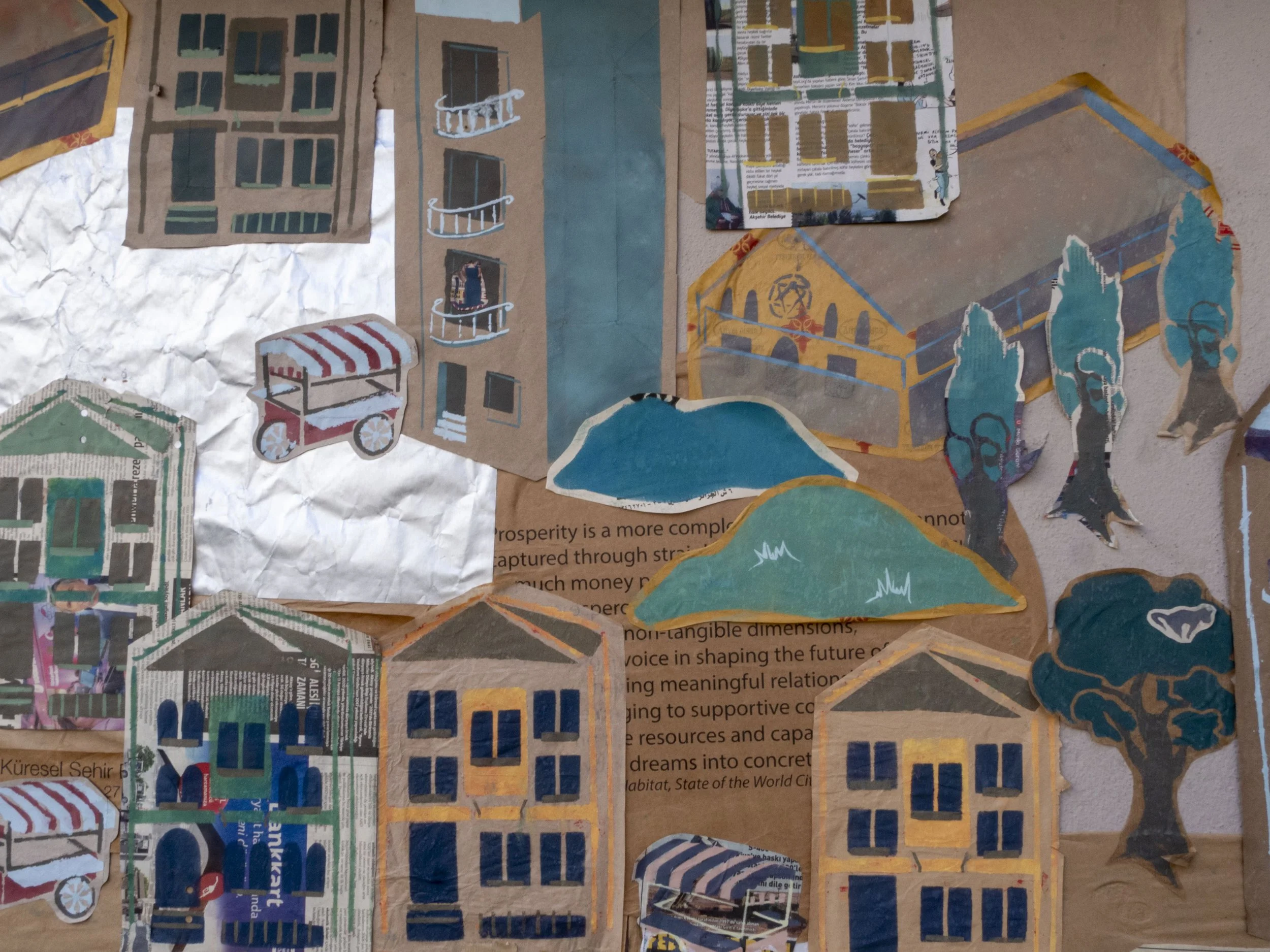
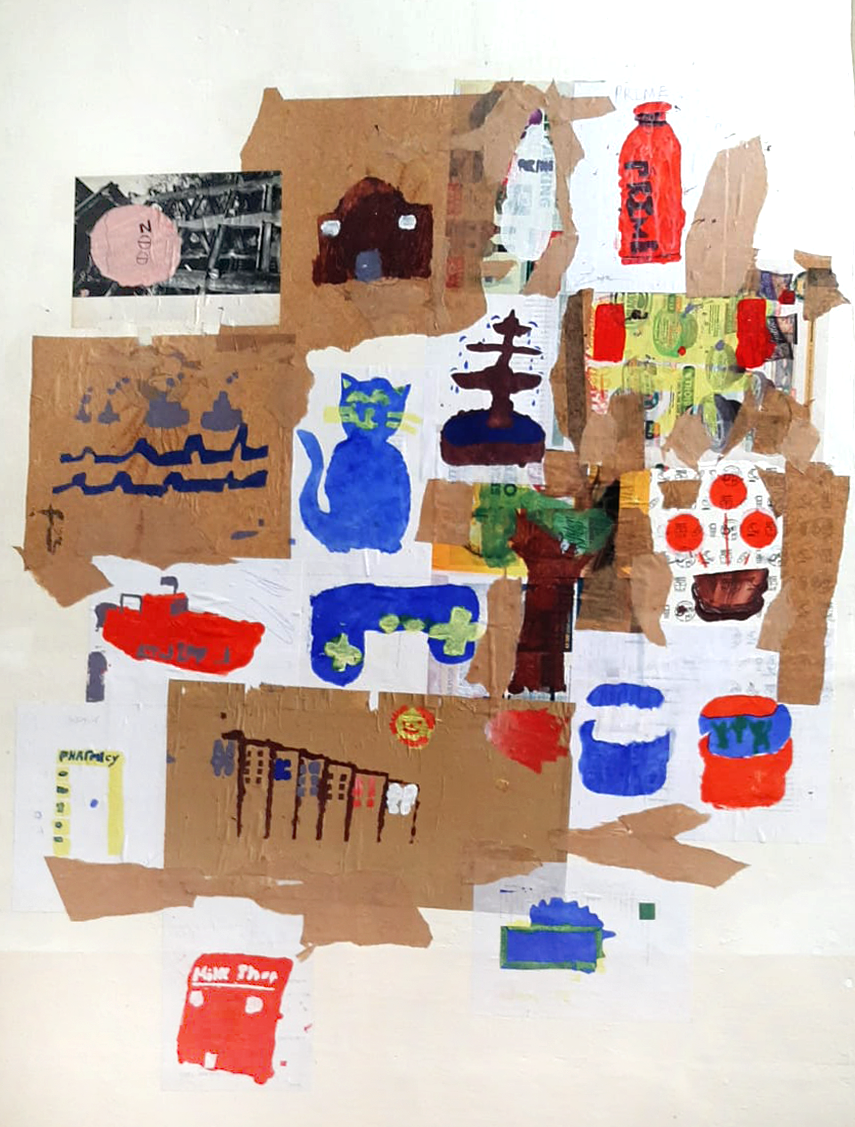
This project aims to encourage spatial ownership of local participants by providing the community an opportunity to create and realize visions of their urban environment. Desirable elements of the city are discussed and compiled either through on-site research or a workshop format, finding new and creative ideas to express what a city can be. These ideas are sketched, turned into stencils, printed, and collaged into one large representation of what the local communities want from an urban space.
The entire project, from stencil to print, is completed on post-consumer paper donated by visitors and community members and put together with biodegradable adhesive.
Istanbul
Istanbul’s urban development is generally understood to be at the whim of Those With the Power to Make Decisions, in direct opposition to Those Who Are Affected. This binary of powerful and powerless exists within a conflict visible through mega-projects and skyscrapers, obscurıng more subtle ways in which neighborhoods organize and aging buildings settle into the urban ecology.
This project aims to suggest a kind of spatial self-definition outside of this binary for the inhabitants of both the neighborhood of Kurtuluş and the city at large. The specific types of buildings, structures and other elements included were inspired by conversations with city residents and observations of the neighborhoods near the venue. They were printed on paper donated by visitors and community members. The mural was installed over the week of the festival, with visitors supervising and contributing to each day’s work in a way that reflected the different attitudes and the challenges that arose each day. The piece remains on the wall and will deteriorate naturally.
This mural was installed as part of Mahalla: Palımpsest in September 2022.
The final mural was 200x600cm, ink & wheat paste on found paper.
Valletta
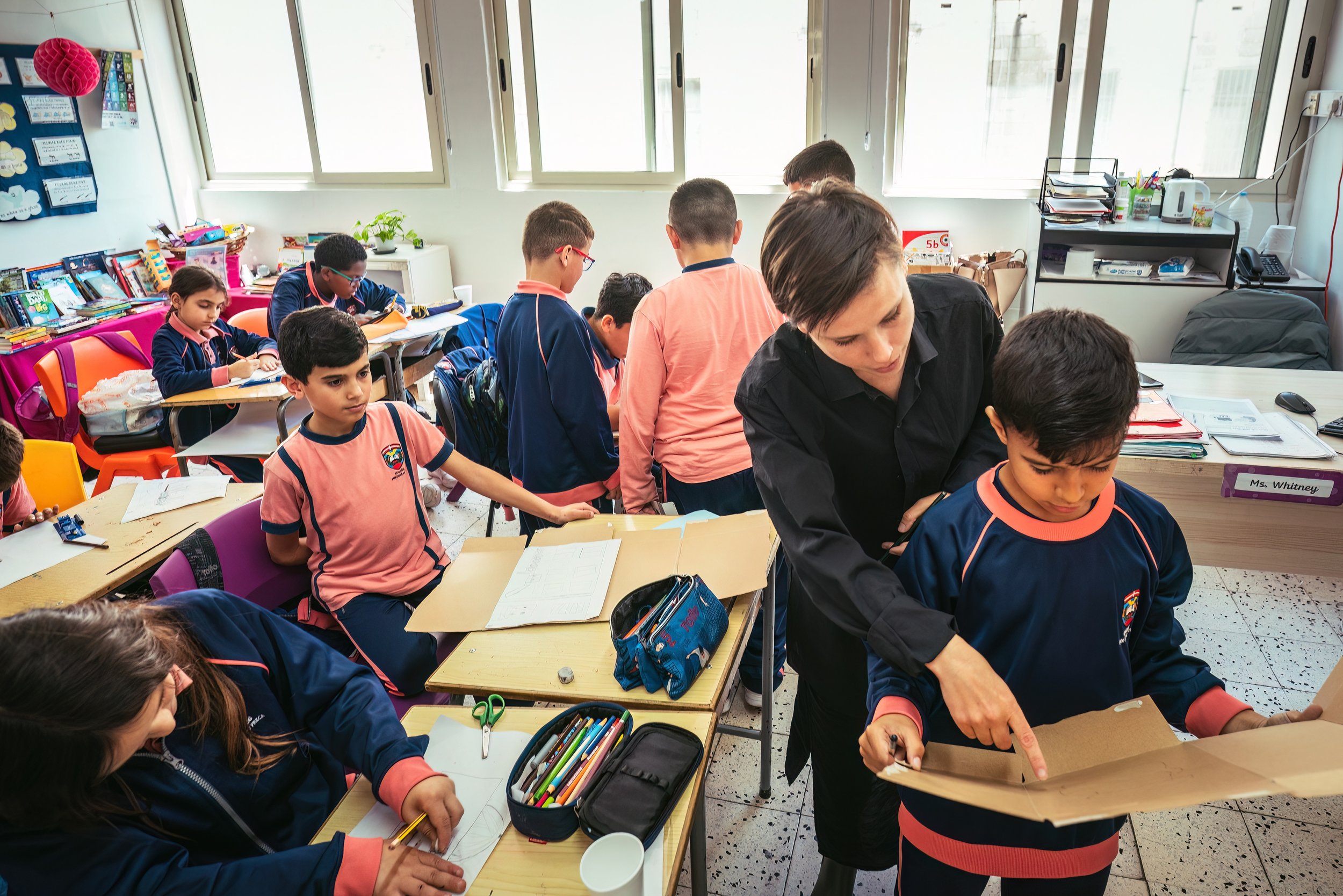
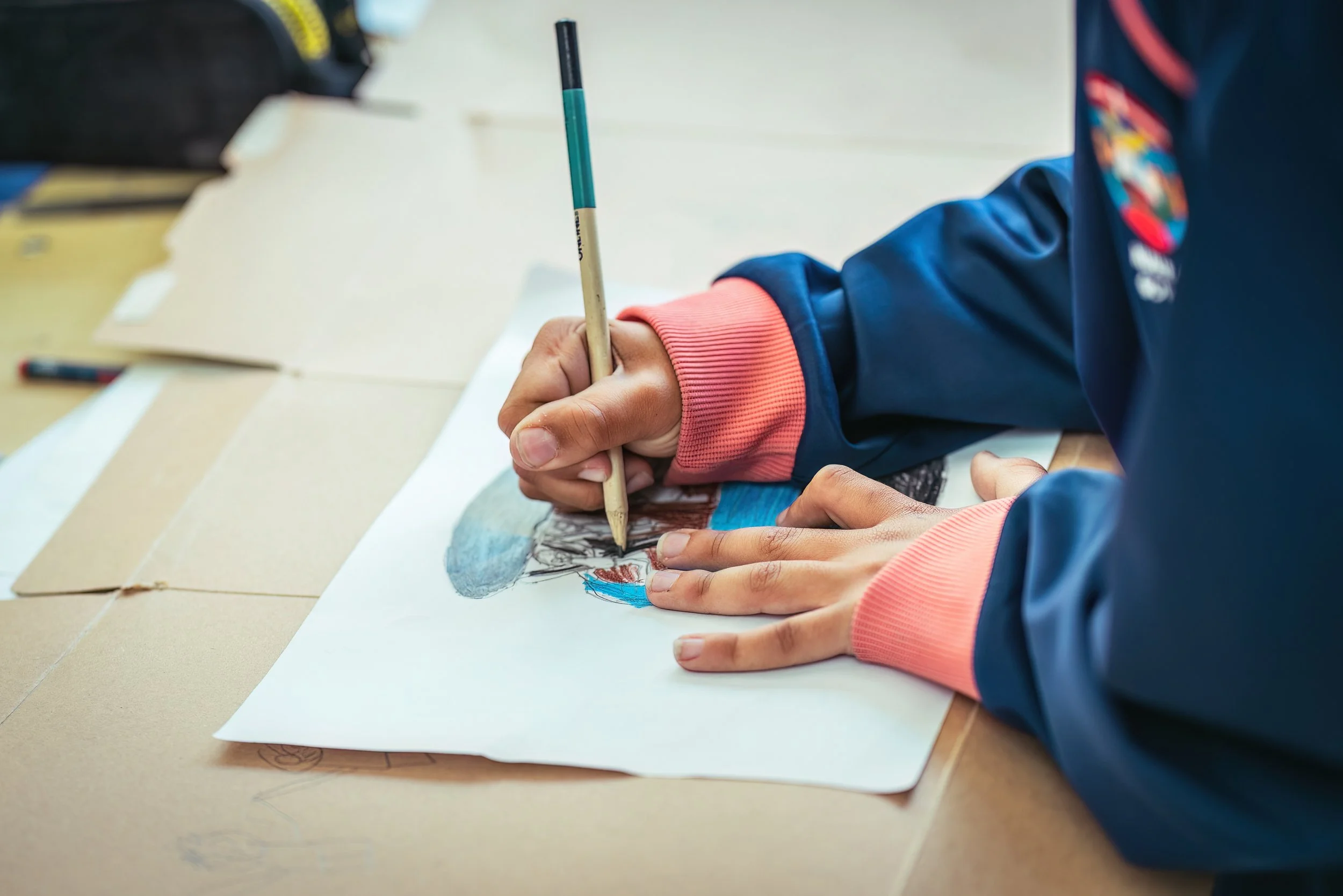
The goal of Vucijiet Beltin is to provide opportunities for fourth-grade students at St Gorg Preca College in Valletta to practice agency within their community and urban space. During my residency in Malta I was asked by the organizer to conduct a version of the Lost Paper City project. Over the course of four days the children identified elements they wanted in their city, drew and printed them on recycled paper. The prints were hung within the school near the auditorium.
This workshop was completed as part of Vucijiet Beltin in April 2023. The final mural collage was 80x60 cm, acrylic paint & wheat paste on found paper

-
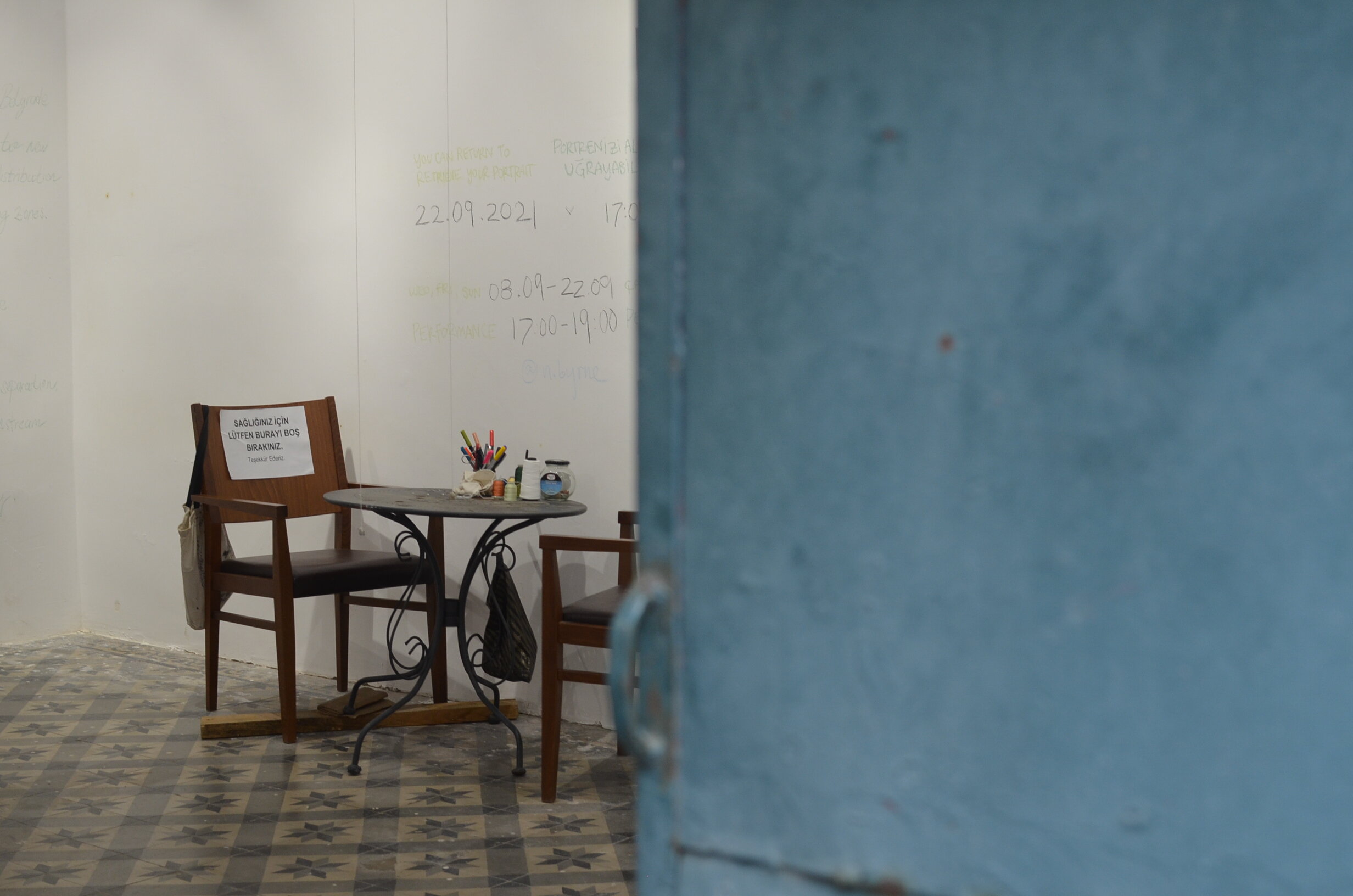
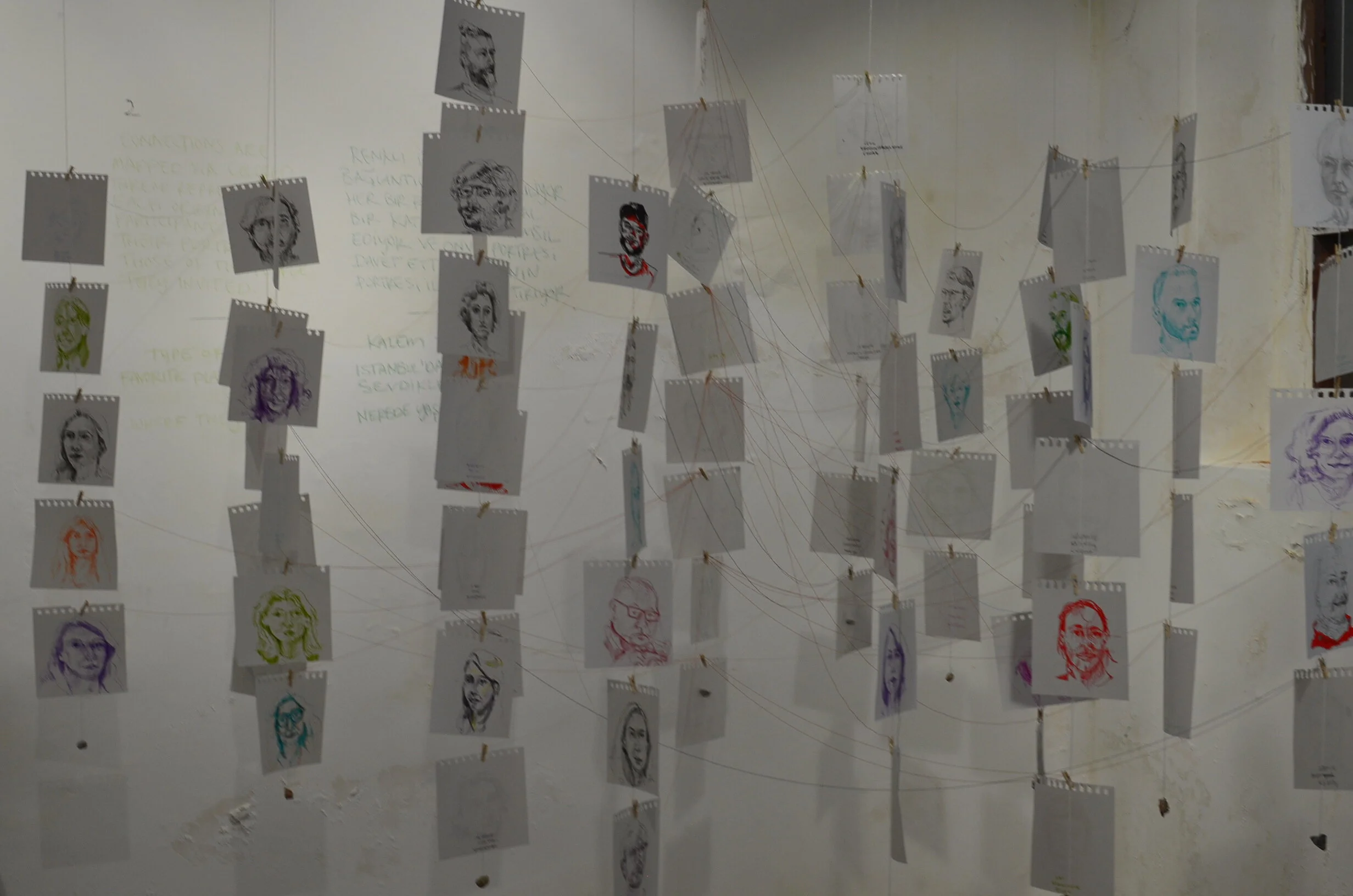
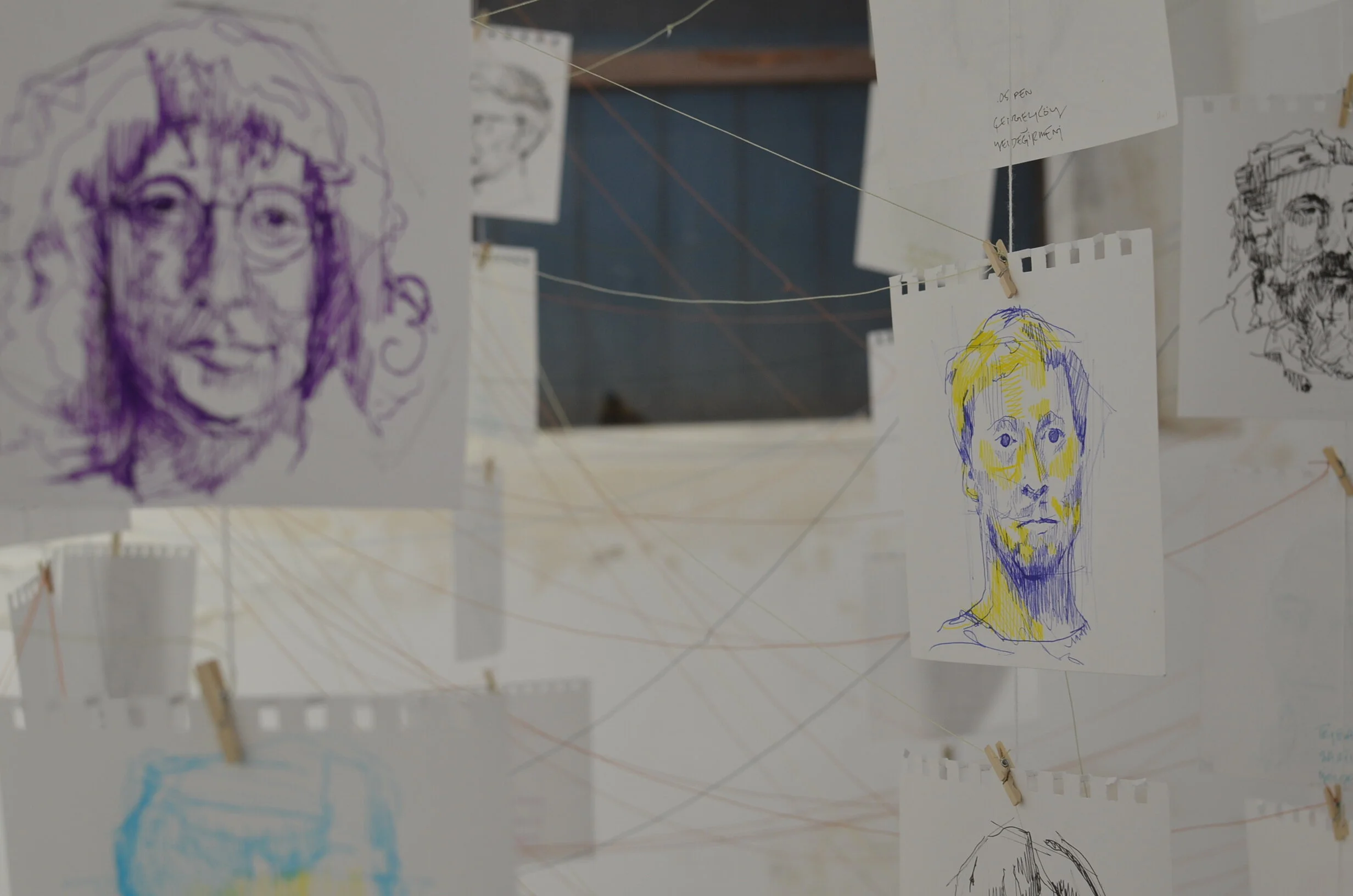
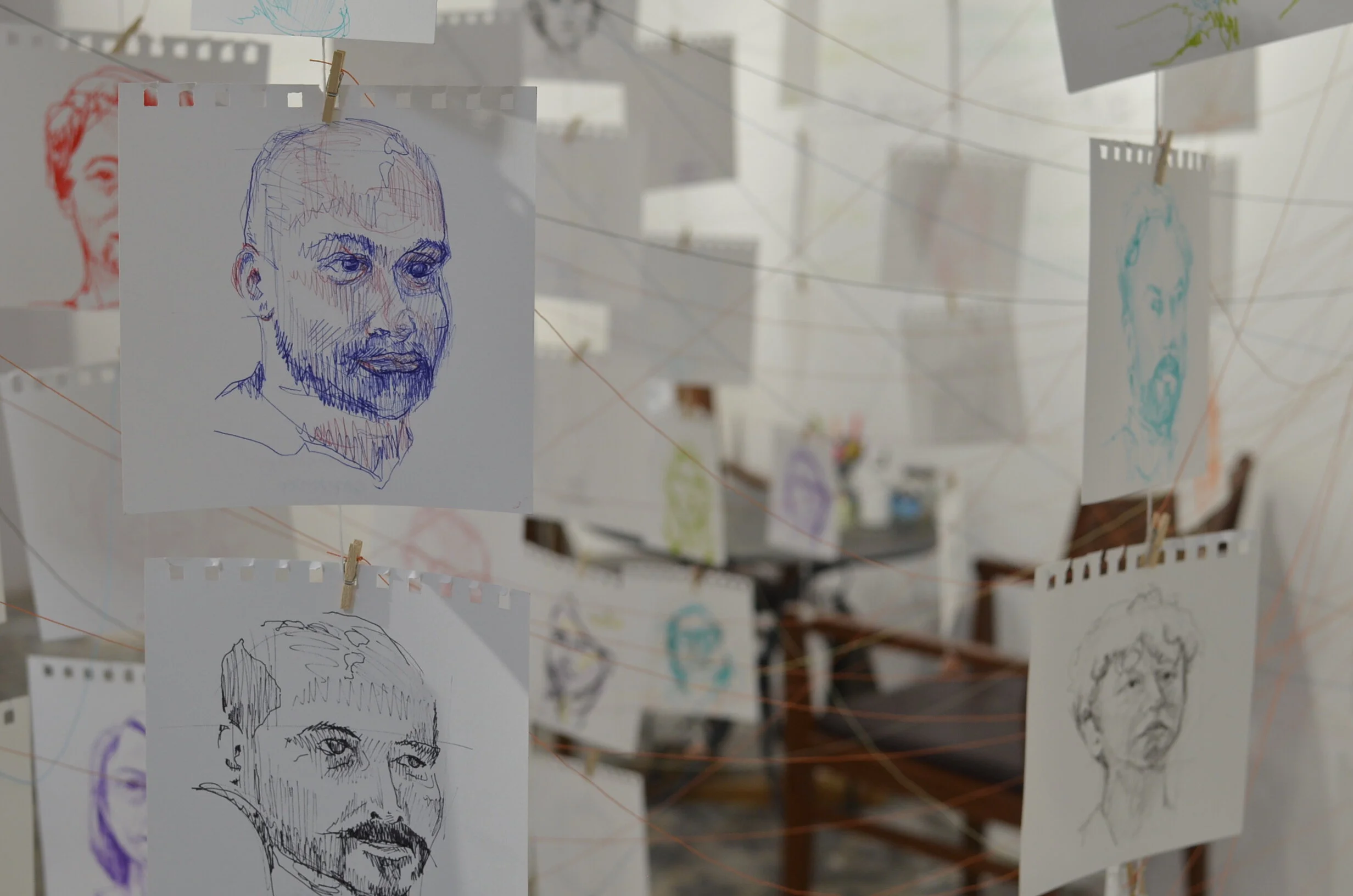
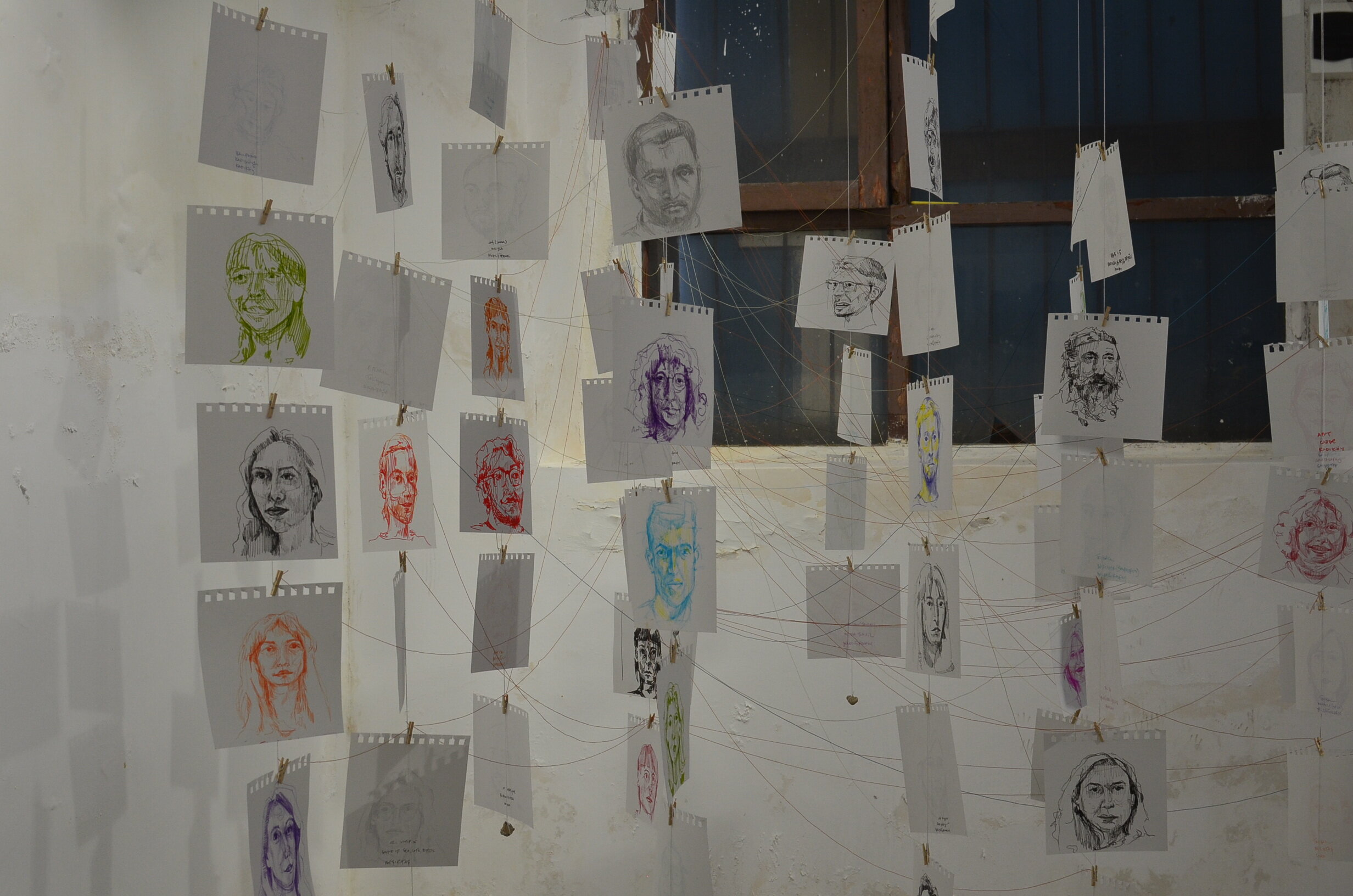
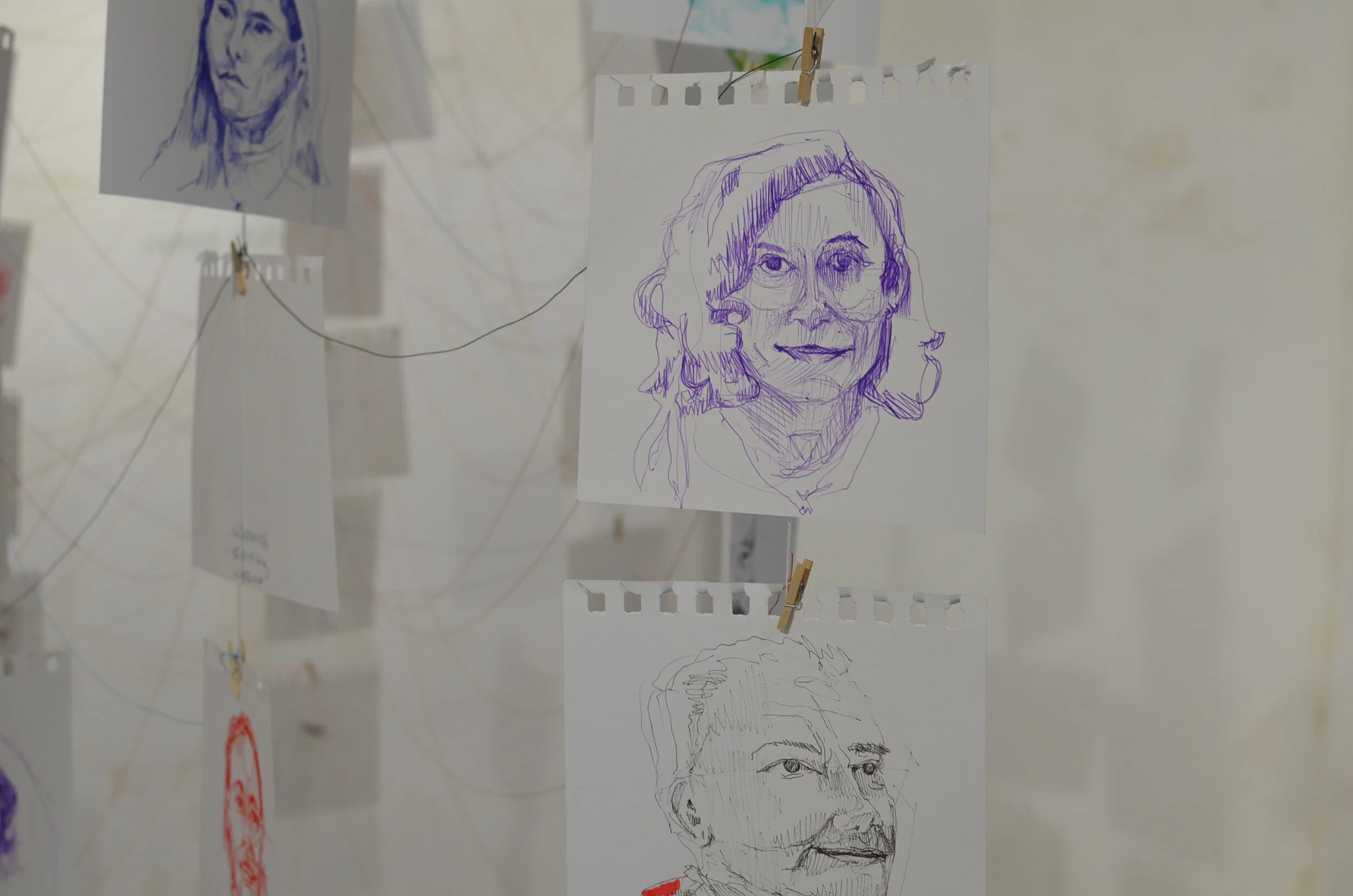
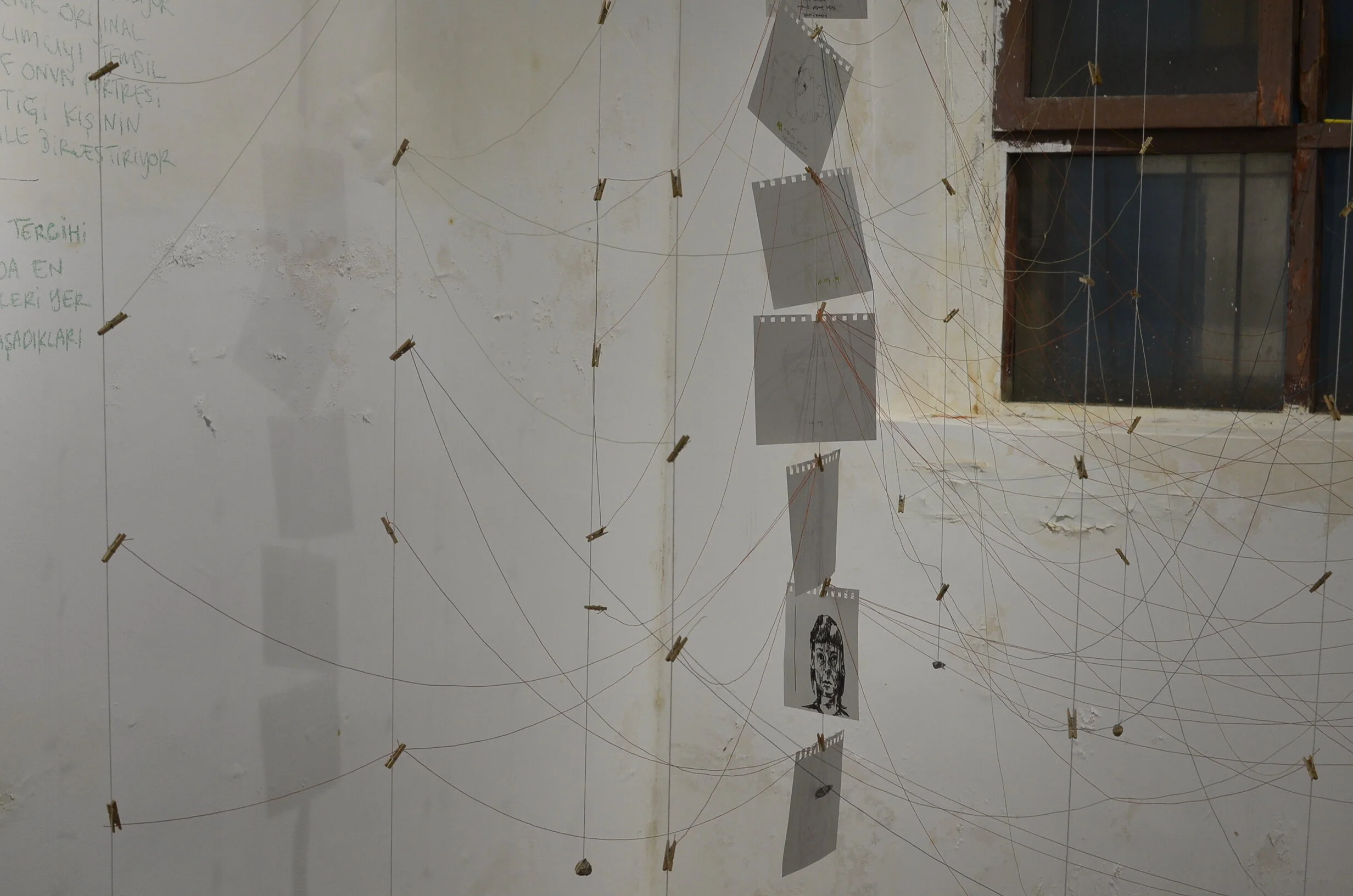
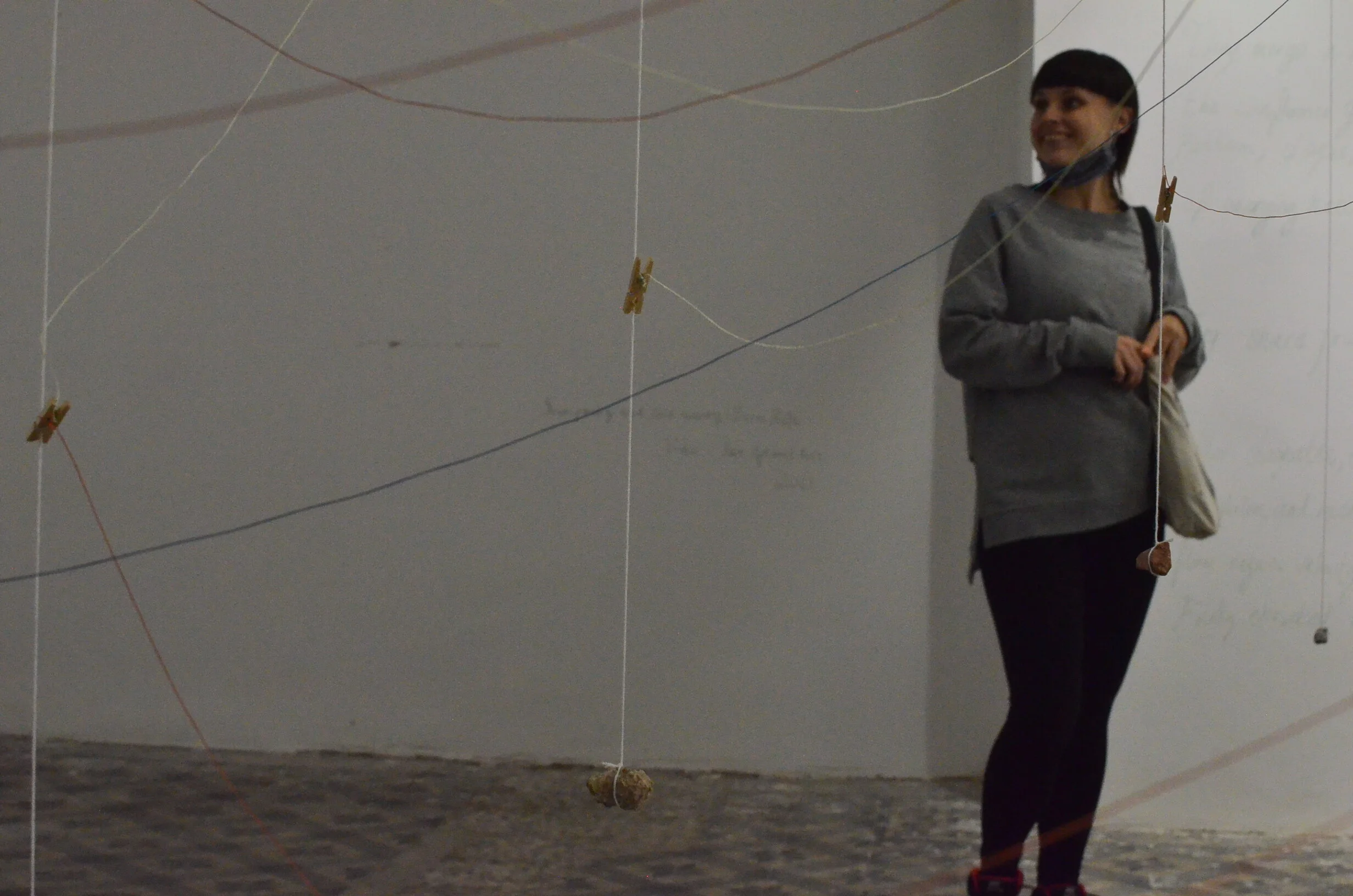
Residents, visitors, and others make up various and diverse faces encountered throughout Istanbul. All portraits are organized through personal connections, emphasizing the ways in which we form and expand community, and our influence within it. In this installation, each portrait is attached to the idea of place, grounding the presence of each participant in behavioral patterns that emerge, systematically or randomly, through their connection to locations in the city and people in the city.
part one
beginning with the artist, six chosen individuals are asked to sit for a short portrait. They, in turn, invite others to sit for a portrait, all of which are included in a larger installation.
part two
portraits are hung and connections mapped via colored thread that represents each original participant, leading their portrait to that of the people they invited to join the project.
part three
beginning during the opening on Mahalla Festival, visitors are invited to sit for portraits during performance hours. These portraits are added to the installation and connected to a new self-portrait of the artist.
This installation was exhibited as part of the Mahalla Festival 2021: Murmuration, at Yeldeğirmeni Sanat Merkezi.

-
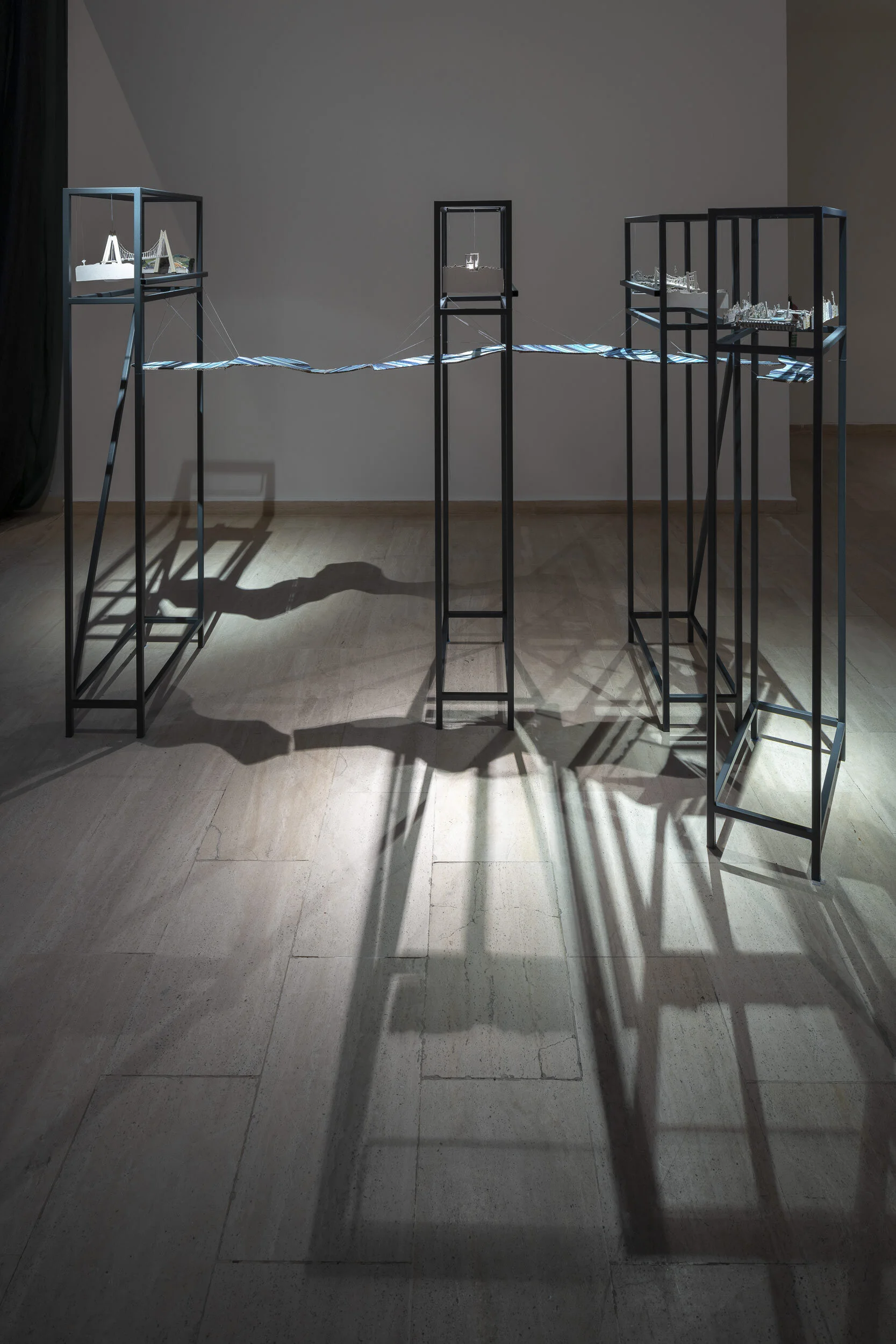
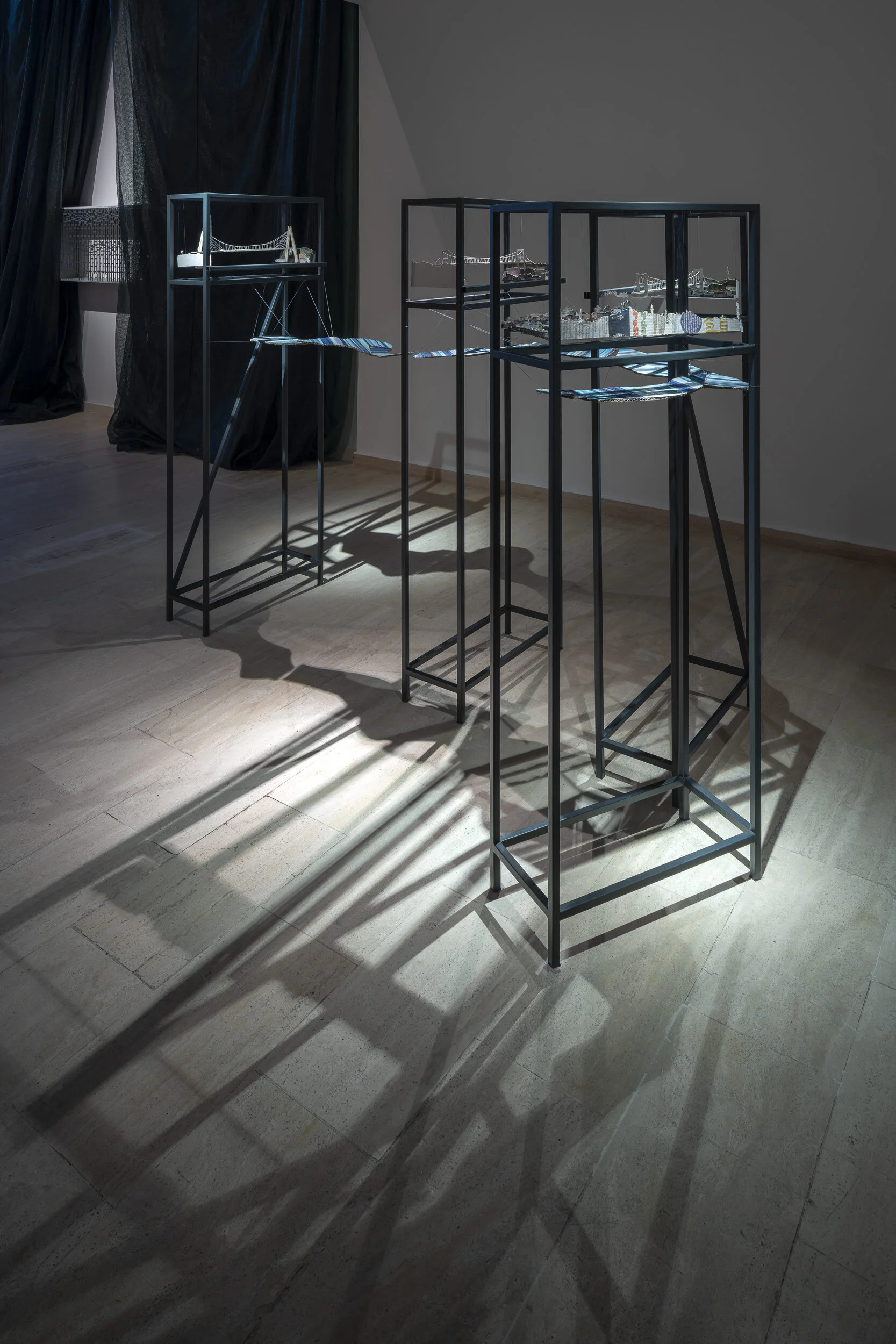
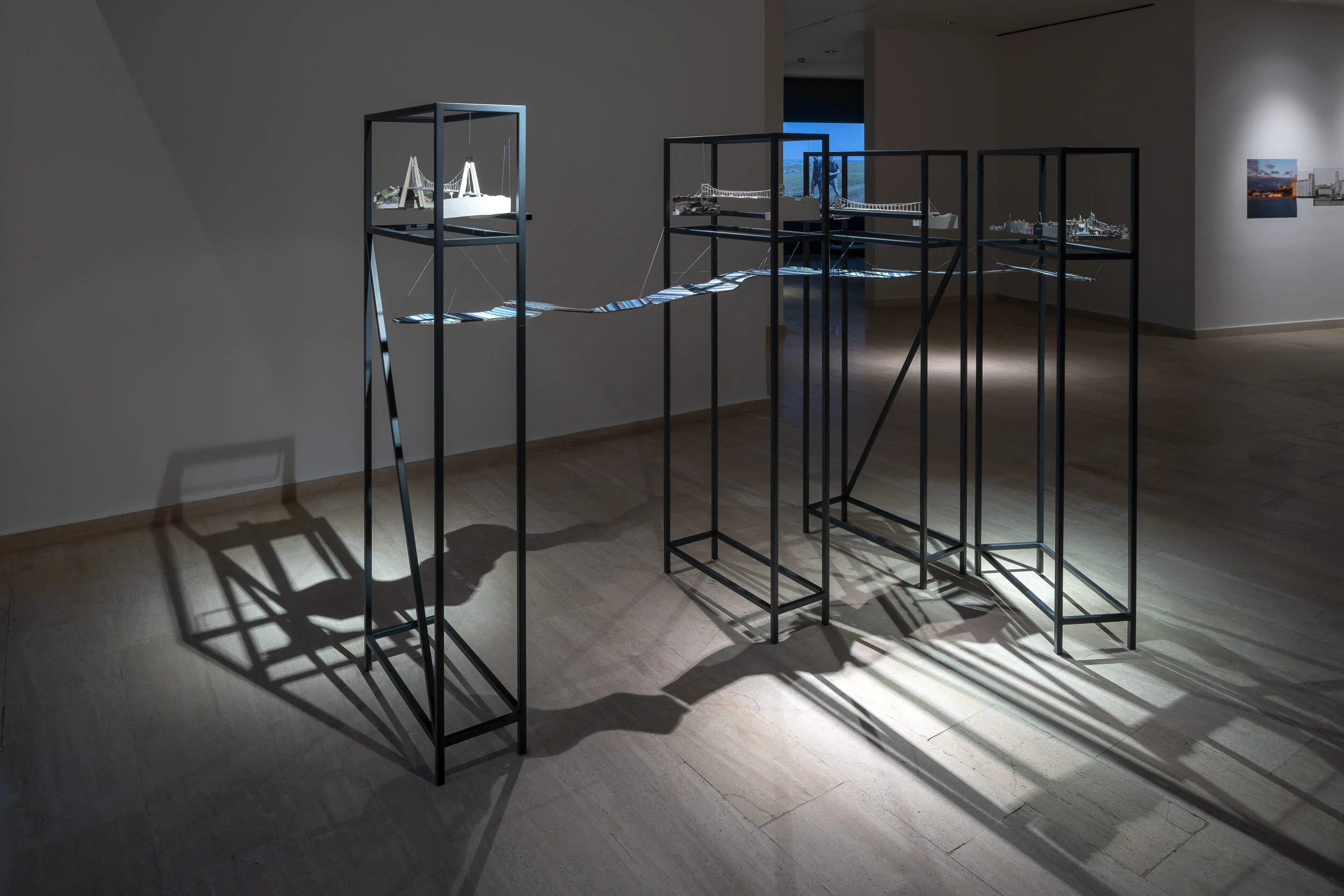
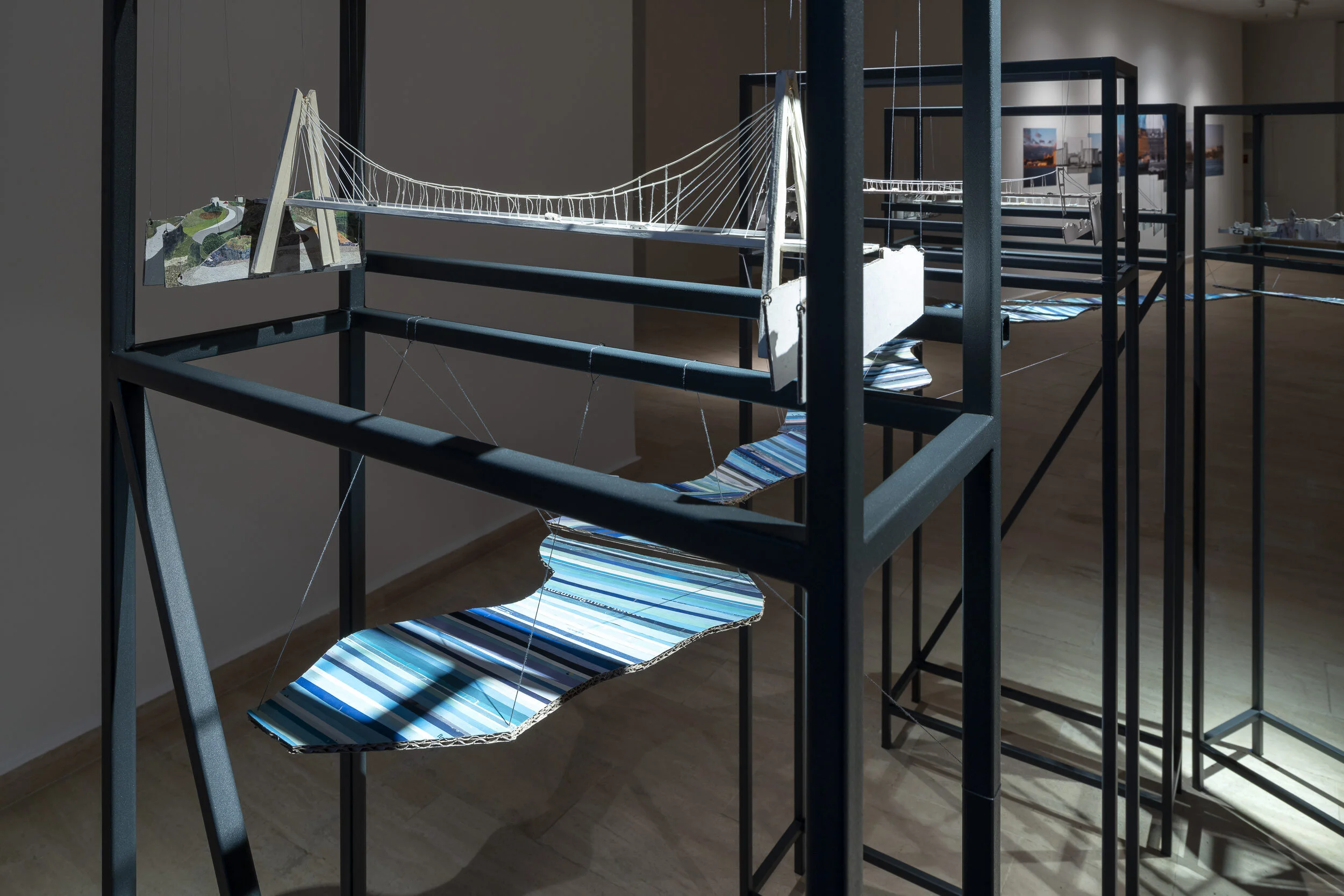
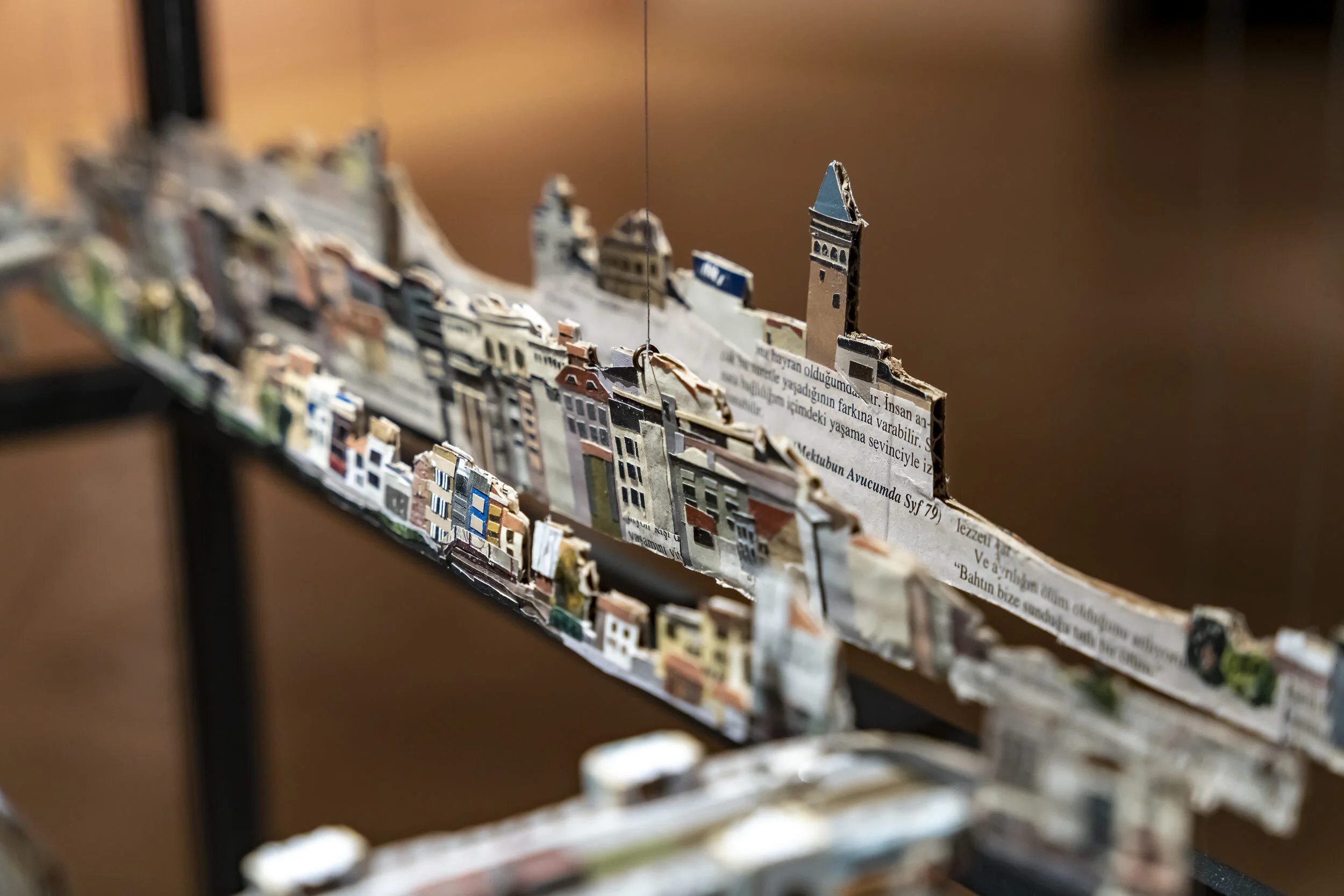
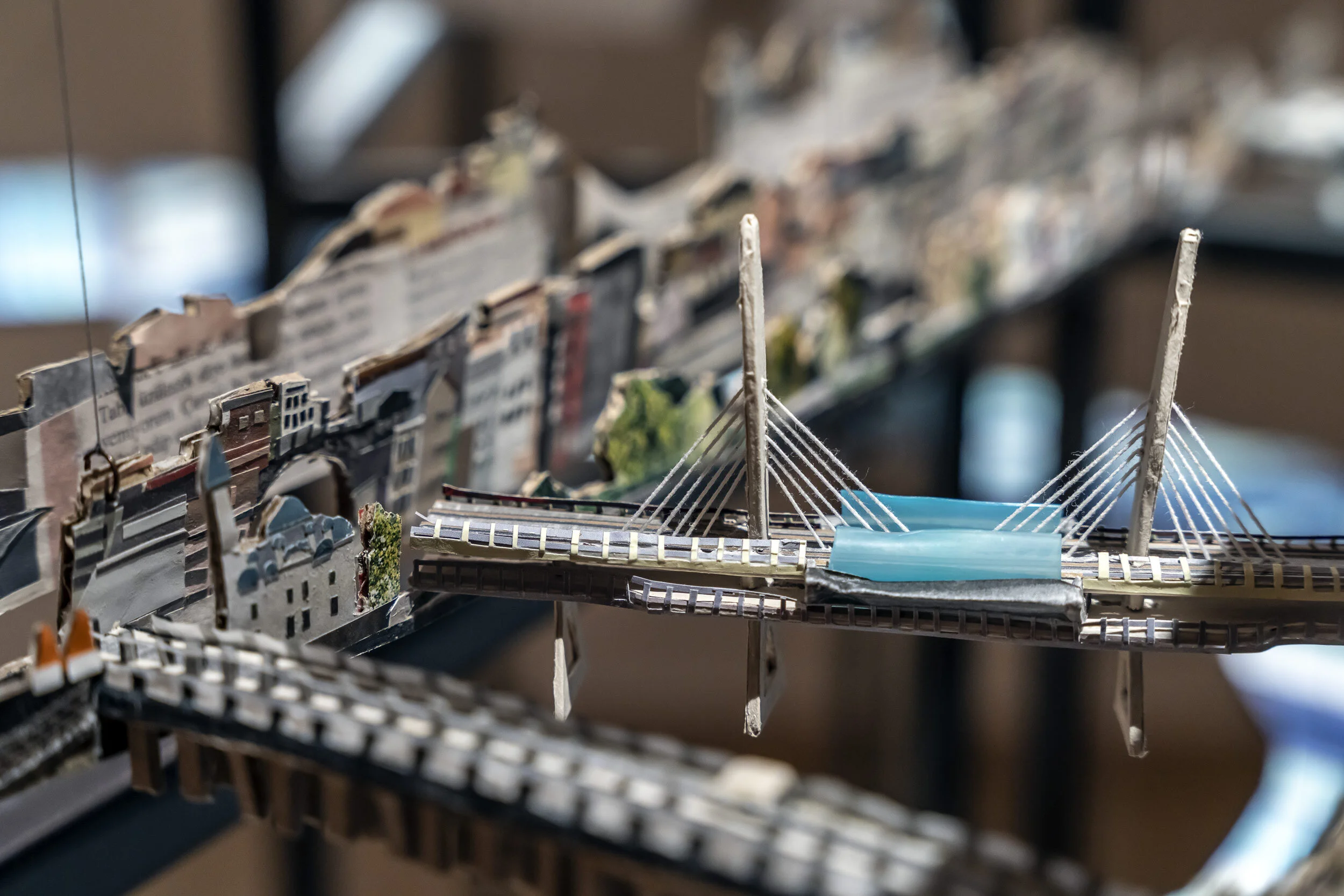
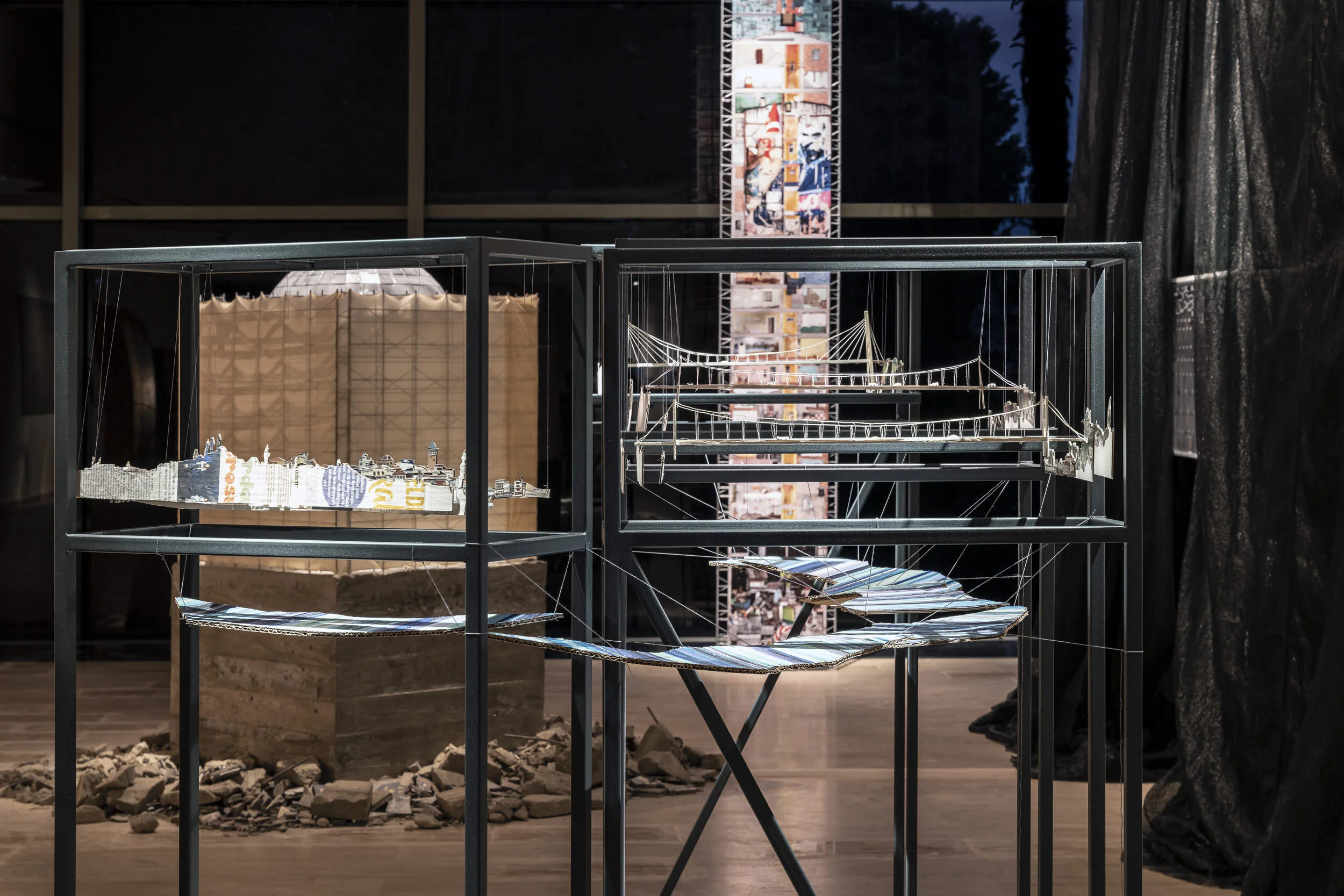
An urban imaginary is an understanding of an urban space that is constructed by its users. In a city as large and diverse as Istanbul there are many potential understandings of how its physical presence influences our experience of it. In recent years, alongside the development of an increasingly hierarchical urban design, much of the city’s infrastructure projects, from new bridges to new ferries, have dealt with managing how we cross the waterways on which the city is built.
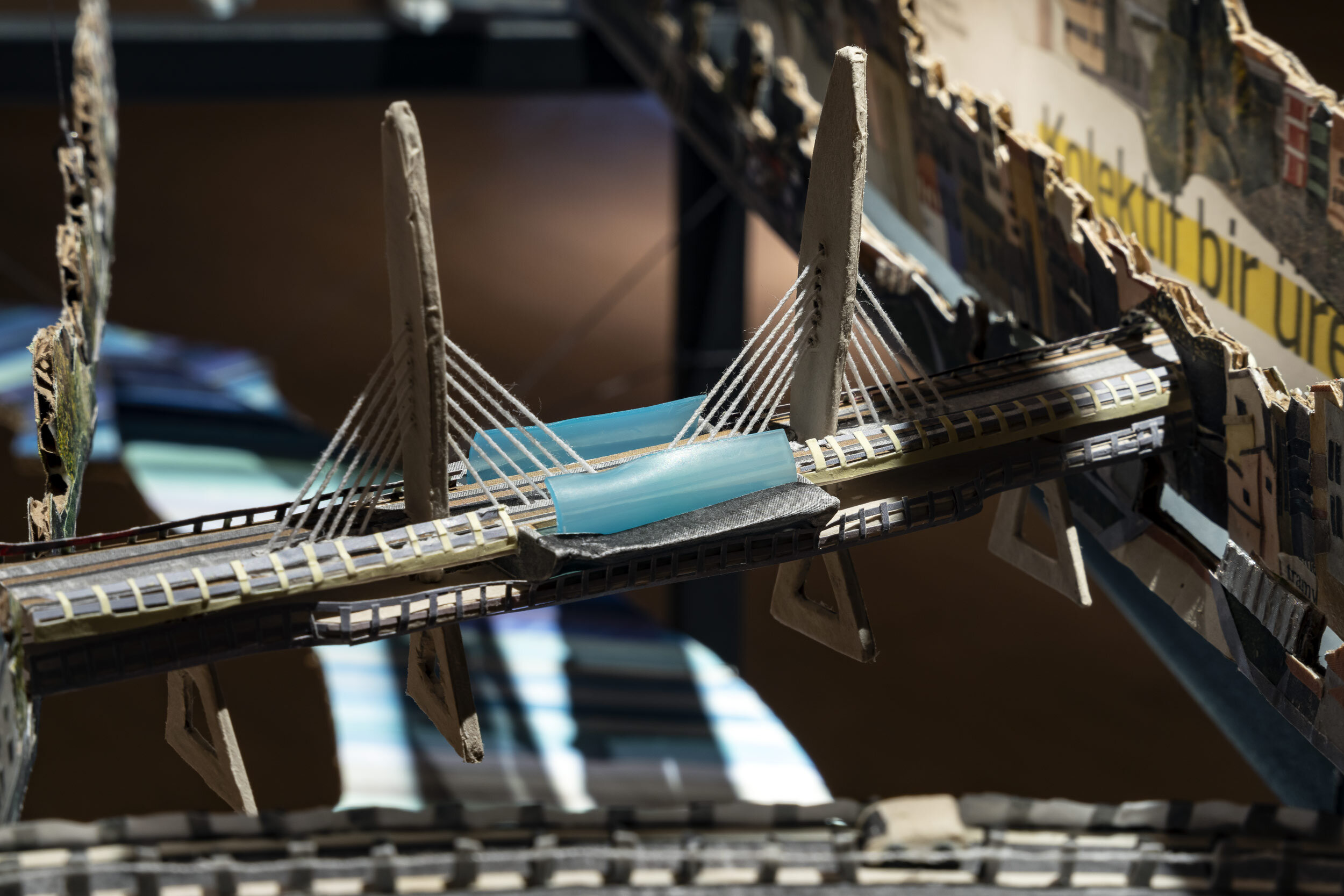
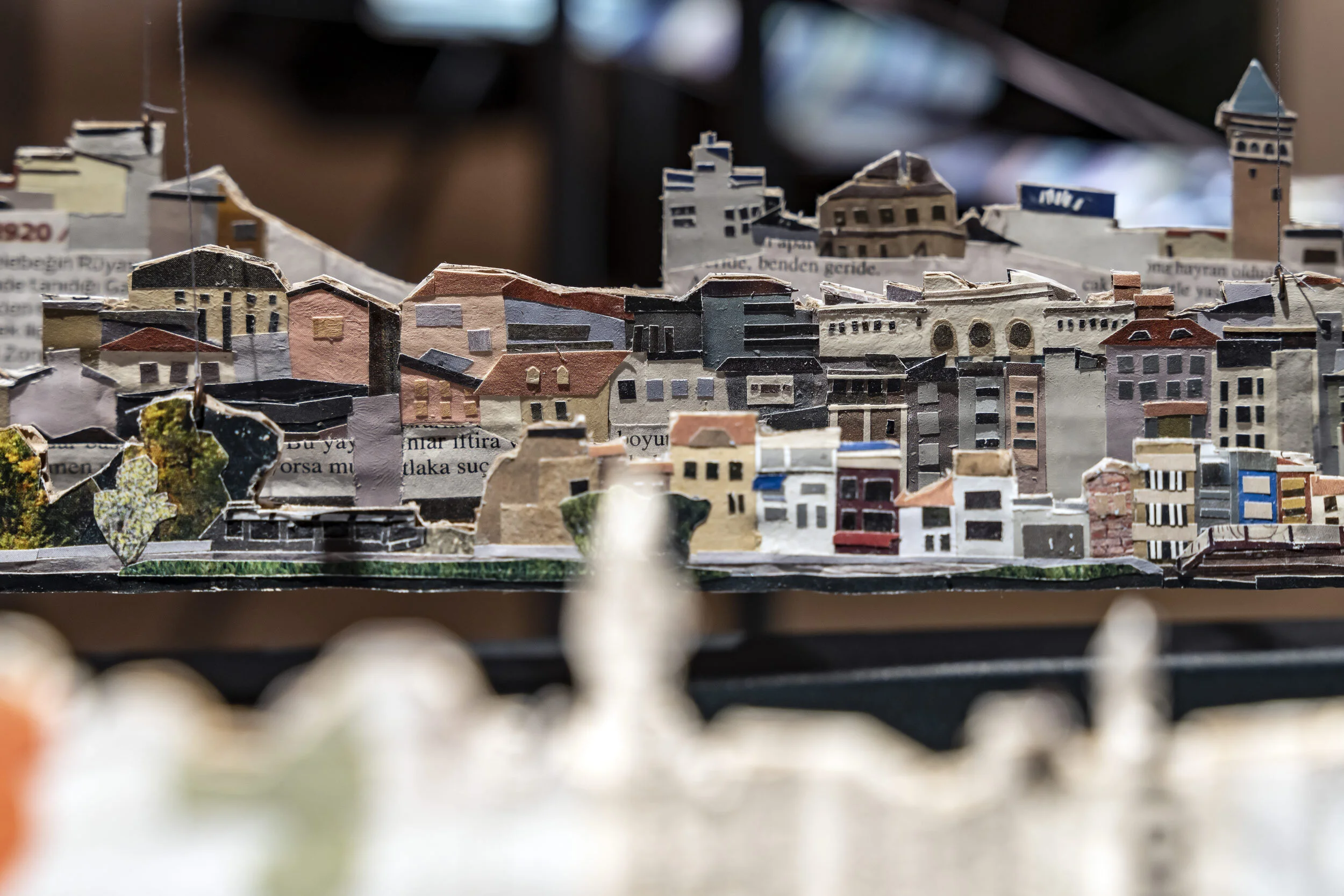
In this piece I encourage viewers to examine, develop and diversify their own imaginary of Istanbul, focusing in particular on how visual elements of our space and structures can show underlying political functions. Drawing from plein-air observation, personal anecdotes and continuing research on Istanbul’s urban development, the piece develops a strong contrast between the monumental Bosporus bridges and the smaller bridges of the more touristic and historical Golden Horn.
The Galata, Haliç and Ataturk bridges show a cliché grandeur of historic minarets next to the graffitied bustle of public docks, parks, and even public transportation. The representation of the auto-only Bosporus bridges references a division between those with the means to cross and those without and emphasizes their monumentality.
The movement of the piece suggests that the urban imaginary exists, not as a fixed conception of the space, but as a dynamic and collective process that occurs in the space between our individual experience.
This installation was exhibited as part of Dün Bugün İstanbul, at the Sakıp Sabancı Musesi.
photo credit Murat Germen